ZetaEarth: How Smart Robotics is Shaping the Future of Indian Agriculture
Explore how ZetaEarth utilizes robotics to solve agricultural inefficiencies, its business model, market potential, and lessons for aspiring ag-tech entrepreneurs.
Introduction: Who is ALGODELTA SOLUTIONS PRIVATE LIMITED and What Problem Do They Solve?
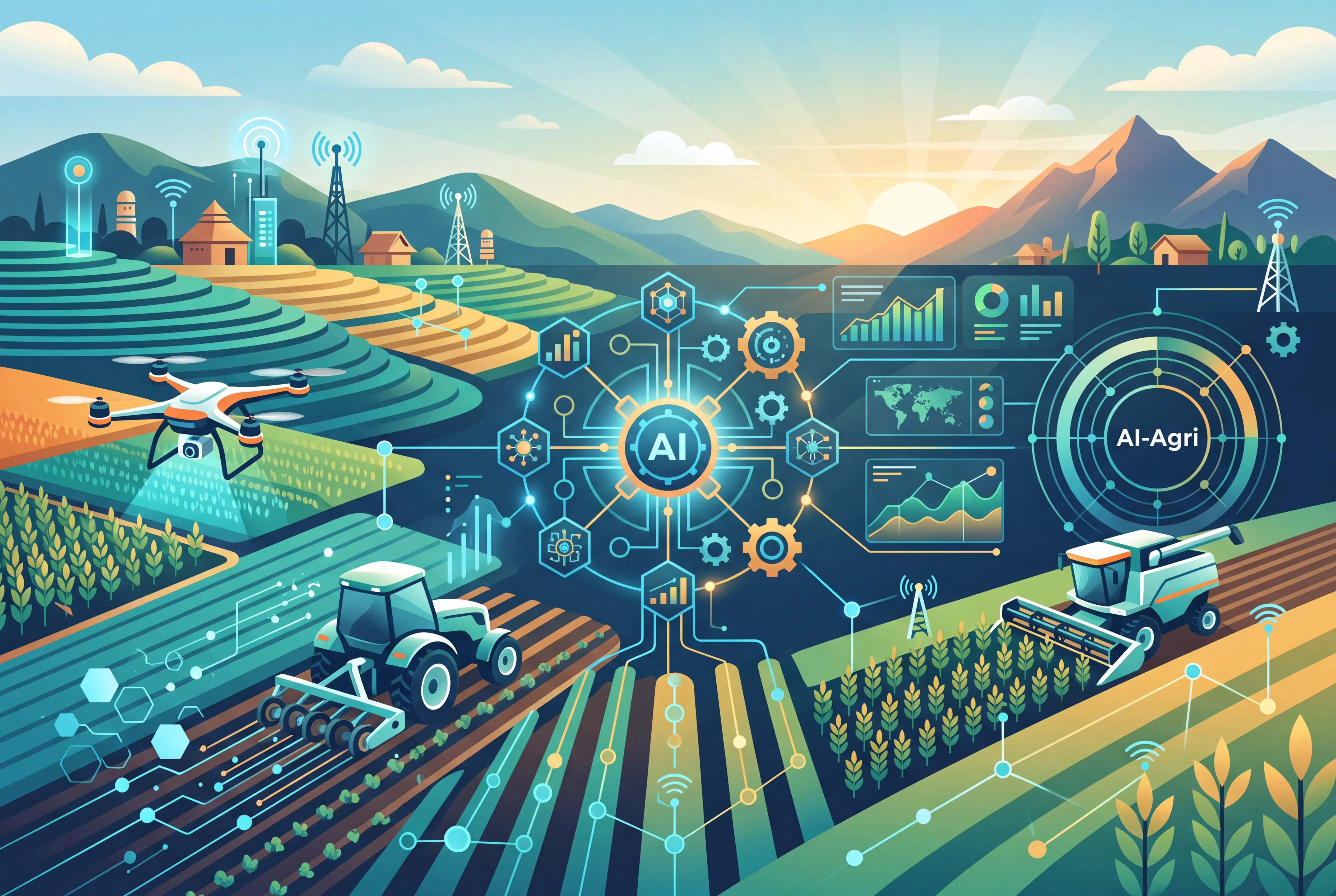
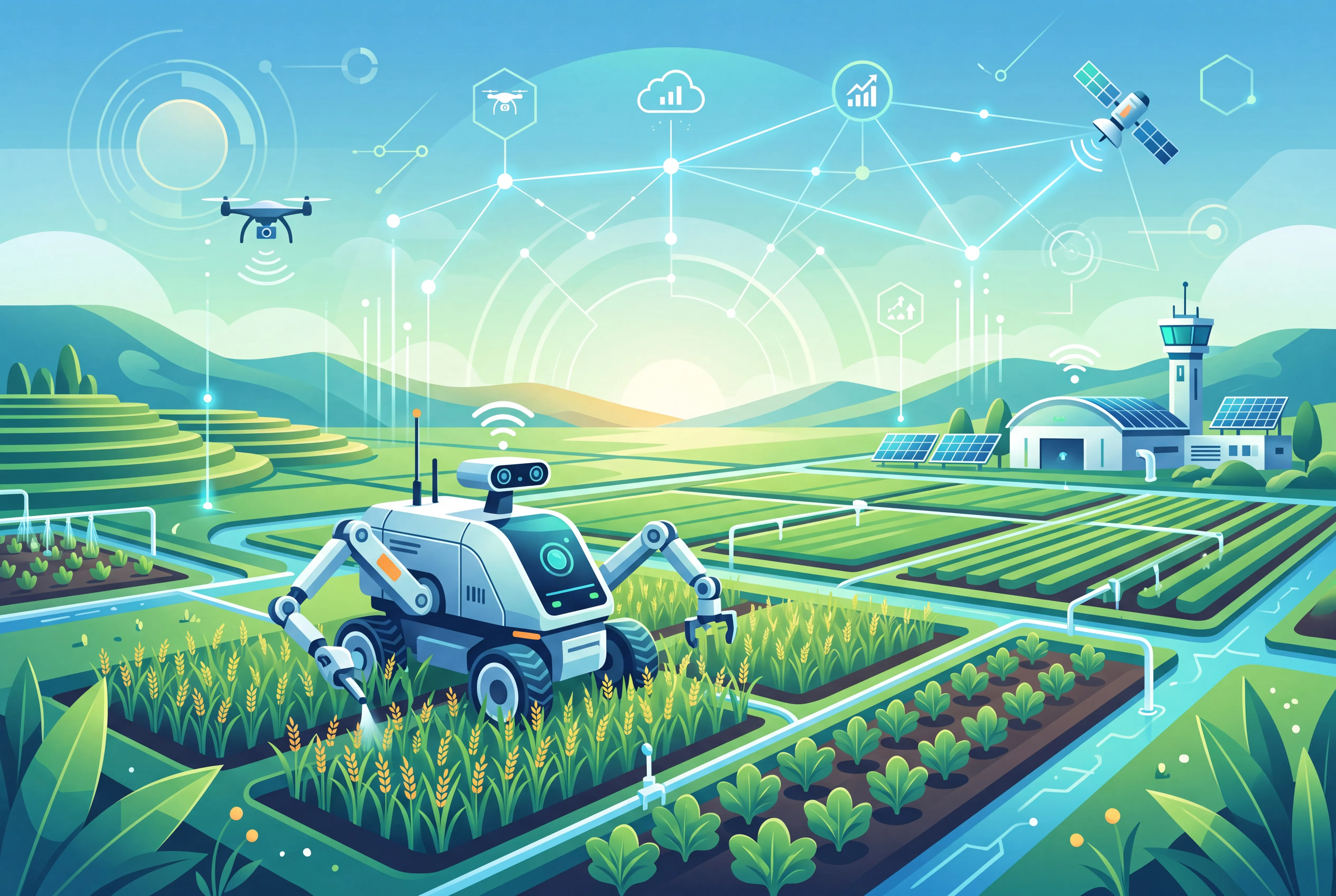
ALGODELTA SOLUTIONS PRIVATE LIMITED, through its deep-tech initiative ZetaEarth, is developing autonomous agricultural ground vehicles to modernize farming operations in India. By integrating AI, sensor fusion, and computer vision, they provide affordable solutions for spraying, seeding, and crop monitoring. Their goal is to reduce labor dependency, improve precision, and optimize resources for farmers who previously lacked access to advanced automation due to high costs and technical complexity.
The agricultural sector in India faces significant challenges, including labor shortages and inefficient resource application. While precision agriculture exists in developed economies, those solutions are often prohibitively expensive or unsuited to the fragmented, diverse Indian terrain. ZetaEarth aims to bridge this gap by prioritizing scalability and cost-effectiveness. This startup isn't just building robots; it is creating a platform intended to adapt to the specific realities of Indian fields, empowering farmers to improve yields without needing massive capital expenditures.
By focusing on the specific pain points of small-to-medium landholders, ZetaEarth positions itself as a critical player in the "smart farming" shift. The company’s approach is rooted in the belief that data-driven tools can democratize efficiency, turning traditional farming into a modern, predictable, and more profitable enterprise. This move toward indigenous, low-cost robotics is a massive step forward in transforming how food is produced in the region.
Market Analysis: Industry Trends and Target Audience
The target audience for ZetaEarth includes small-to-medium scale farmers in India, agricultural cooperatives, and farm service providers. These customers often struggle with the unpredictable costs of manual labor, rising input costs such as water and fertilizers, and the physical toll of traditional farming methods. The pain point is clear: manual methods are inefficient, leading to over-spraying of chemicals and labor-intensive seeding processes that cut directly into profit margins.
Industry trends currently favoring this model include the increasing digitization of rural India, government initiatives promoting "Agri-Tech," and a growing focus on sustainable farming. Precision agriculture is shifting from being a luxury for large corporate farms to a necessity for individual farmers facing climate-induced volatility. As the cost of sensors and high-performance computing decreases, the feasibility of deploying autonomous robots on smaller plots of land has surged.
Furthermore, the labor landscape is shifting. Many rural youths are migrating to urban centers, creating a vacuum that only technology can fill. ZetaEarth meets this trend head-on, offering a reliable, 24/7 automated solution that doesn't need to rest or deal with the complexities of managing human labor. This is not just a technological upgrade; it is an operational survival strategy for the modern farmer.
Competitive Landscape: How ALGODELTA SOLUTIONS PRIVATE LIMITED Compares to Existing Alternatives
Traditional agricultural methods rely on manual labor, bullock-drawn equipment, or expensive, large-scale imported machinery. While international ag-tech companies offer advanced autonomous solutions, they are rarely designed for the constraints of Indian infrastructure, power grids, or crop patterns. ALGODELTA SOLUTIONS PRIVATE LIMITED differentiates itself by focusing on the local ecosystem first.
Key Advantages of ALGODELTA SOLUTIONS PRIVATE LIMITED
- Hyper-Local Design: Unlike international competitors, ZetaEarth builds for local terrain and specific Indian crops, ensuring the robot doesn't get stuck in muddy or uneven fields common in rural India.
- Cost-Efficiency: By optimizing hardware and software locally, they avoid the overhead of imported technology, making their machines accessible to mid-sized farmers.
- Integrated AI and Sensor Fusion: The reliance on computer vision allows for real-time adjustments, such as spot-spraying weeds rather than blanketing entire fields, which saves on chemical costs and promotes soil health.
- Simplicity of Deployment: The system is designed to be "deploy-ready," requiring minimal technical training for farmers who may not be familiar with high-end robotics.
Limitations and Market Challenges
- Infrastructure Barriers: The lack of reliable internet or stable charging infrastructure in some rural parts of Gujarat and India could hinder the full potential of autonomous cloud-connected systems.
- Farmer Trust and Adoption: Farming is a traditional industry; convincing older, experienced farmers to trust a machine to handle their seeding and spraying requires significant education and demonstration.
- Maintenance and Support: Creating a fleet of robots is only half the battle; maintaining them across thousands of rural villages requires a robust logistical network that is expensive to establish.
AI Startup Validation Score & Assessment
- Problem Significance: 95/100 - Agricultural labor shortage and resource inefficiency are massive, systemic problems that directly impact food security and farmer income.
- Market Demand: 85/100 - There is high demand for affordable automation in India’s massive agricultural market, provided the price point remains attractive.
- Innovation Level: 80/100 - Using sensor fusion and AI to lower the barrier to entry is innovative, even if autonomous robots themselves exist elsewhere.
- Business Model Potential: 75/100 - Hardware-as-a-service or direct sales models are viable, but margins in hardware can be thin initially.
- Scalability Opportunity: 80/100 - Once a platform is established, it can be replicated across diverse regions, though custom-fitting hardware to new terrains takes time.
- Competitive Advantage: 70/100 - The home-field advantage (local design) is a strong moat, but larger global players could eventually enter with localized versions.
- Long-Term Sustainability: 85/100 - As climate change puts pressure on yields, the need for precision farming will only grow, making this a future-proof sector.
Overall Validation Score: 81/100
Strategic Lessons for Aspiring Entrepreneurs
- Design for the Constraint: ZetaEarth succeeds because they built for the specific constraints of the Indian farmer. Entrepreneurs often fail by importing a model that works in California or Europe into a market like India without adjusting for power, infrastructure, or cost-sensitivity.
- Start with the Pain Point, Not the Tech: Don't build a "robot" because you love robotics. Build a tool that solves a specific cost issue, like the high expense of manual spraying. If the tech saves money, the adoption will follow.
- Build Trust Through Demonstration: In hardware startups, seeing is believing. ZetaEarth’s success will likely hinge on their ability to perform live demonstrations that yield immediate, visible results for the farming community.
Opportunities for Concept Improvement & Expansion
- Hardware-as-a-Service (HaaS) Model: Instead of asking farmers to buy expensive robots, ZetaEarth could deploy a service where they charge per acre for the work done. This lowers the barrier to entry significantly.
- Data Monetization: The company could collect data on soil health, crop cycles, and yields. This data is incredibly valuable to insurance companies, fertilizer brands, and government agricultural departments.
- Battery Swapping Infrastructure: Creating a standardized battery-swapping network would resolve the problem of downtime during long planting or spraying shifts, further increasing productivity for the farmer.
Opportunities and Risks of Starting a Similar Business
Opportunities
New founders entering the ag-tech space can capitalize on the growing data gap in rural sectors. There is massive potential for startups that can turn farming into a "data-smart" process. The push toward organic and controlled farming provides a niche for specialized robots that can perform weeding without chemicals, a high-growth area for new startups.
Risks
Hardware startups face the "valley of death" regarding cash flow. Developing physical machinery is capital-intensive and slow compared to software. Additionally, the regulatory landscape regarding autonomous vehicles on public land or farming plots can be unpredictable. Founders must be prepared for long feedback cycles and the need for significant initial capital for R&D.
Frequently Asked Questions
FAQ 1: What is the main problem that ZetaEarth addresses?
ZetaEarth solves the inefficiencies and high costs associated with traditional Indian farming by providing affordable, autonomous robots that handle labor-intensive tasks like spraying and seeding with precision.
FAQ 2: Who are the primary target customers for this type of business?
Small-to-medium-scale farmers, agricultural cooperatives, and farm service providers who need to increase crop yields while minimizing manual labor costs and chemical waste.
FAQ 3: What is the typical revenue model for a startup like ZetaEarth?
Typical revenue models include the direct sale of hardware, maintenance contracts, or a service-based model (e.g., paying per acre of land treated) which makes the technology more accessible.
FAQ 4: How can someone validate a similar startup idea?
Validating a hardware-based idea requires a deep dive into manufacturing costs and market willingness to pay. You can use platforms like ideation.biz to perform a quick market check, ensuring your idea has a path to profit before you spend money building prototypes.
FAQ 5: What factors should be analyzed before launching a new venture?
Entrepreneurs should evaluate market demand, competitor saturation, and the cost to acquire customers. Tools like the SWOT analysis available at ideation.biz help clarify whether your business model stands a chance against established incumbents.
FAQ 6: How can founders identify hidden risks in their business concept?
Risk identification involves analyzing supply chain dependencies, regulatory hurdles, and potential technology failure points. Using an AI-driven validator like ideation.biz allows you to stress-test your business plan and uncover risks you might have missed in your initial research.
Conclusion
ZetaEarth represents a promising synthesis of advanced robotics and practical agricultural needs. By grounding their technology in the specific economic realities of the Indian farmer, they have a clear path to driving meaningful change in productivity and resource management. The future of farming is inevitably automated, and initiatives like this are setting the pace.
Are you working on an idea that could change an industry? Don't let your vision stay a dream—validate it with data. Use the ideation.biz platform to test your business strategy, analyze your competitors, and get a clear roadmap for success today.
Validate Your Startup Idea Before You Invest Time & Money
Get instant market insights, competitive analysis, and strategic recommendations for your next venture.
Related Blogs
More insights on validation and entrepreneurship.