Alphoenix Design Private Limited: Transforming Industrial Design and Motor Efficiency
Explore the business model of Alphoenix Design Private Limited, their role in motor efficiency, and key lessons for hardware entrepreneurs in industrial design.
Introduction: Who is Alphoenix Design Private Limited and What Problem Do They Solve?
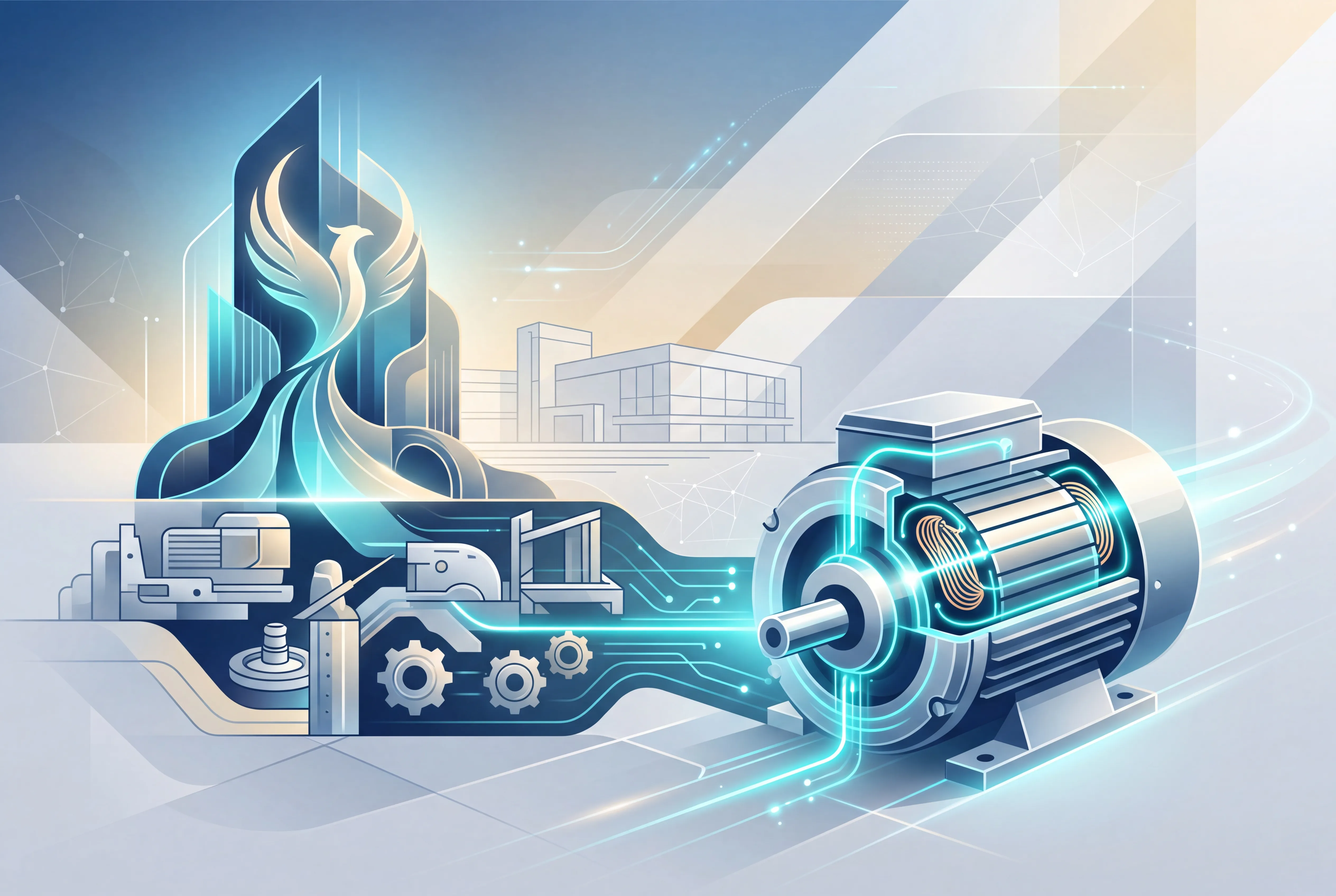
Alphoenix Design Private Limited is an industrial design firm based in Mehsana, Gujarat, that bridges the gap between hardware conceptualization and high-performance motor manufacturing. The startup serves diverse sectors, including robotics, drone technology, e-mobility, and household appliances, by providing end-to-end product development services and specialized Brushless DC (BLDC) motor solutions. Their focus on high-efficiency components aims to solve the industry-wide challenge of energy loss and material waste in motorized applications.
Industrial design is often perceived as mere aesthetics, but in the realm of hardware, it is the bedrock of functionality and sustainability. Many manufacturers struggle with inefficiency in motor performance, leading to higher heat dissipation, increased energy consumption, and significant raw material waste. Alphoenix Design addresses these pain points by utilizing advanced engineering practices and materials like CRGO (Cold-Rolled Grain-Oriented) steel. By optimizing the design cycle from concept to final assembly, they help companies reduce their environmental footprint while boosting the operational longevity of their products.
Market Analysis: Industry Trends and Target Audience
The target audience for Alphoenix Design comprises manufacturers in the e-mobility, industrial automation, and consumer electronics sectors who require bespoke hardware and efficient propulsion systems. As global industries pivot toward sustainable energy, the demand for high-efficiency motors has seen a massive surge. Companies are under increasing pressure to meet ESG (Environmental, Social, and Governance) targets, making material efficiency a non-negotiable metric for hardware suppliers.
Several industry trends support this business model. First, the rapid adoption of e-bicycles and electric drones has necessitated compact, high-torque, and energy-efficient BLDC motors. Second, the push for localized manufacturing in regions like India creates a ripe environment for firms that provide both design consulting and localized hardware manufacturing. Third, there is an increasing reliance on advanced materials science; firms that can demonstrate a reduction in material waste by up to 70% while maintaining performance are becoming essential partners in the supply chain.
Competitive Landscape: How Alphoenix Design Private Limited Compares to Existing Alternatives
The industrial design and motor manufacturing space is competitive, occupied by both legacy engineering firms and nimble, specialized startups. Traditional competitors often focus solely on mass manufacturing, sometimes neglecting the design-consulting aspect, while design firms often lack the technical depth to manufacture hardware at scale. Alphoenix Design positions itself as an integrated partner that handles the full spectrum, which distinguishes them from specialized component importers or pure-play design studios.
Key Advantages of Alphoenix Design Private Limited
- Integrated Lifecycle Services: By managing projects from concept to completion, they reduce the friction often found when shifting designs between different engineering and manufacturing vendors.
- Material Efficiency: The utilization of CRGO steel reflects a commitment to advanced magnetic circuit design, which directly benefits the client by lowering power consumption and increasing motor lifespan.
- Domain Expertise: Their specialization in diverse sectors (robotics, e-bicycles, appliances) allows for cross-pollination of design ideas, enabling them to bring innovative solutions from one industry to another.
- Sustainability Focus: With a 70% reduction in material waste, they offer a value proposition that aligns with modern environmental regulations and CSR (Corporate Social Responsibility) mandates.
Limitations and Market Challenges
- Resource Intensity: Industrial design and hardware manufacturing require significant capital investment in R&D and specialized production equipment, which can limit rapid scaling.
- Market Competition: They face price competition from large-scale, low-cost international manufacturers who might not offer the same level of bespoke design service but can undercut pricing significantly.
- Supply Chain Vulnerabilities: Relying on specialized materials like CRGO steel means the company is susceptible to fluctuations in raw material pricing and global supply chain disruptions.
AI Startup Validation Score & Assessment
- Problem Significance: 85/100 - The need for efficient energy solutions in robotics and e-mobility is critical to the future of transportation and automation.
- Market Demand: 80/100 - High demand for localized, efficient, and reliable hardware components in the Indian and global market.
- Innovation Level: 75/100 - The application of material science to motor efficiency is a strong technical differentiator.
- Business Model Potential: 70/100 - The hybrid model of service (consulting) and product (manufacturing) offers diverse revenue streams, though it is capital intensive.
- Scalability Opportunity: 65/100 - Scaling manufacturing facilities is significantly harder than scaling software, requiring physical infrastructure growth.
- Competitive Advantage: 70/100 - Their ability to provide end-to-end design and manufacturing creates a strong moat against component traders.
- Long-Term Sustainability: 80/100 - Their commitment to low-waste manufacturing aligns with future environmental regulations and industry trends.
Overall Validation Score: 75/100
Strategic Lessons for Aspiring Entrepreneurs
- Combine Services with Products: For hardware startups, offering design consulting can provide the cash flow and client relationship depth necessary to sustain the heavier R&D phase required for actual manufacturing.
- Prioritize Sustainability as a Feature: When efficiency translates to lower material waste and energy costs, it stops being just a "green" initiative and becomes a core economic incentive for B2B customers.
- Niche Down to Scale Up: By focusing on specific applications like drones and e-bicycles, Alphoenix Design builds deep expertise that makes them the go-to provider for those specific sectors, rather than being a generic component manufacturer.
Opportunities for Concept Improvement & Expansion
- Implement Digital Twins: By offering digital twin simulations for their hardware designs, they could allow clients to test motor performance in virtual environments before physical manufacturing, further reducing costs.
- Explore Subscription Models: They could consider a "Design-as-a-Service" model for ongoing maintenance and optimization of motors, ensuring recurring revenue beyond the initial hardware sale.
- Strategic Partnerships with Educational Hubs: Partnering with engineering colleges could provide a steady stream of talent and collaborative research, helping them remain at the forefront of material science innovation.
Opportunities and Risks of Starting a Similar Business
Opportunities
- The growing interest in indigenous hardware development provides significant opportunities for founders who can master the engineering complexity of BLDC motors.
- Expanding into modular hardware kits for hobbyists and educational institutes can create a new revenue stream with lower barrier-to-entry.
Risks
- High capital expenditure on equipment and R&D can quickly drain a startup's runway if customer acquisition is not robust.
- Intellectual Property (IP) management is critical; without strong protections, competitors may copy optimized designs, neutralizing the firm's innovation edge.
Frequently Asked Questions
FAQ 1: What is the main problem that Alphoenix Design Private Limited addresses?
Alphoenix Design addresses the inefficiency of hardware motors and the high cost of material waste in industrial applications. They bridge the gap between design and manufacturing, creating high-efficiency motors for sectors like drones and e-mobility.
FAQ 2: Who are the primary target customers for this type of business?
Their target customers include original equipment manufacturers (OEMs) in robotics, consumer home appliances, drone manufacturing, and e-bicycle production firms looking for energy-efficient, reliable drive systems.
FAQ 3: What is the typical revenue model for a startup like Alphoenix Design Private Limited?
The revenue model is likely hybrid, combining upfront consulting fees for product design and engineering services with product-based revenue from the sale of manufactured hardware units and high-efficiency motors.
FAQ 4: How can someone validate a similar startup idea?
Validating a hardware idea requires assessing market demand for the specific efficiency gains you offer. You should analyze competitor products, customer pain points, and current industry gaps. Using a resource like ideation.biz can help you perform deep market research, SWOT analysis, and risk assessments to ensure your hardware concept is commercially viable before you commit to expensive prototyping.
FAQ 5: What factors should be analyzed before launching a new venture?
Before launch, founders must evaluate market size, production scalability, material costs, and regulatory compliance. Understanding these variables is vital. An AI-driven approach through ideation.biz can assist you in generating a structured validation roadmap, comparing your idea against incumbents, and identifying potential hidden costs that often derail hardware startups.
FAQ 6: How can founders identify hidden risks in their business concept?
Founders can identify hidden risks by conducting comprehensive competitor analysis and stress-testing their business model under various market conditions. It is easy to overlook risks like supply chain volatility or regulatory shifts. Platforms like ideation.biz offer advanced validation modes that specifically help identify risk factors and provide strategic recommendations to mitigate them, giving you a clearer picture of your venture’s health.
Conclusion
Alphoenix Design Private Limited represents a crucial intersection of sustainable engineering and modern hardware requirements. Their approach demonstrates that solving complex engineering problems like energy loss is not just a technical endeavor but a business strategy that creates value for both the client and the environment. As the hardware landscape continues to evolve toward higher efficiency, companies that master this integration will undoubtedly lead their respective sectors.
Are you looking to build your own startup or validate a fresh concept in the hardware or technology space? Don't let your idea remain a guess. Use ideation.biz to gain data-driven insights, perform deep competitor analysis, and build a robust roadmap before you invest your time and capital. Validate your startup journey today.
Validate Your Startup Idea Before You Invest Time & Money
Get instant market insights, competitive analysis, and strategic recommendations for your next venture.
Related Blogs
More insights on validation and entrepreneurship.