Altersage Innovations: Applying Robotics and AI to Transform Indian Agriculture
Discover how Altersage Innovations leverages robotics and AI in agriculture. Explore market trends, business challenges, and essential lessons for entrepreneurs.
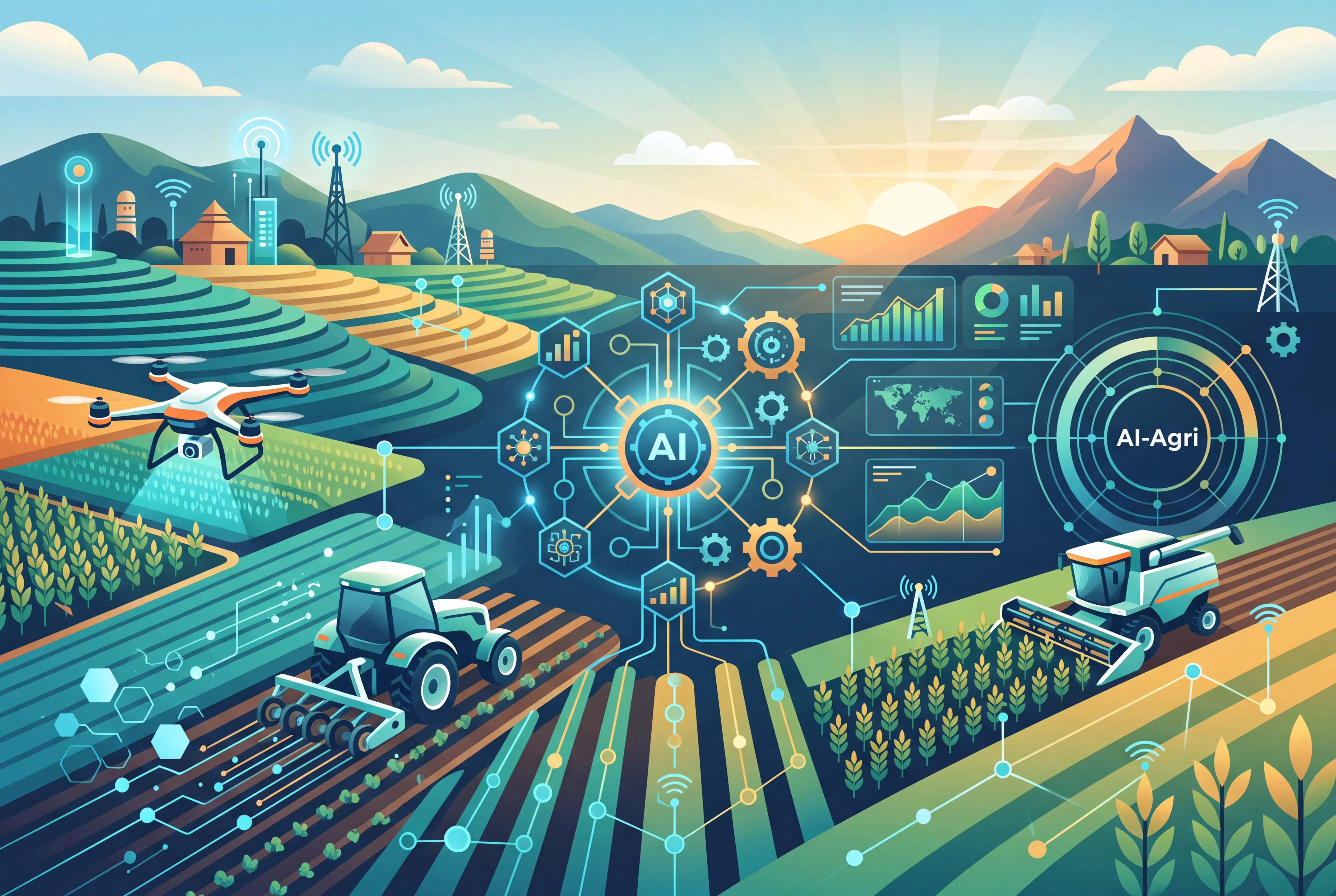
Introduction: Who is Altersage Innovations Private Limited and What Problem Do They Solve?
Altersage Innovations Private Limited is an agri-tech firm based in Kozhikode, Kerala, that specializes in integrating robotics and artificial intelligence into farming operations. The startup aims to address the inefficiencies and labor shortages inherent in modern agriculture by providing automated solutions designed to boost productivity and sustainability. By focusing on advanced mechanical and digital integration, they aim to modernize traditional agricultural practices, making them more resilient and efficient for the modern farmer.
The global agricultural sector faces a massive labor crisis as younger generations migrate to urban centers, leaving a void in skilled farm labor. Meanwhile, traditional methods are often resource-heavy and lack the precision required for sustainable farming. Altersage Innovations steps into this gap, attempting to replace labor-intensive tasks with robotic systems that provide higher accuracy in irrigation, crop maintenance, and harvesting. This approach is particularly relevant for the Indian market, where small to medium-sized farms struggle to maintain profitability against rising input costs and climate unpredictability.
By leveraging AI, the company intends to move beyond simple automation toward data-driven farm management. This means using sensors and machine learning to monitor soil health, water usage, and crop growth cycles in real-time, allowing for precision agriculture. The mission of Altersage Innovations is to bridge the gap between high-tech engineering and practical field application, ensuring that farming becomes a predictable, profitable, and technologically advanced profession rather than a manual, uncertain gamble.
Market Analysis: Industry Trends and Target Audience
The target audience for Altersage Innovations consists of large-scale commercial farms, agricultural co-operatives, and forward-thinking agrarian businesses looking to modernize their operational workflow. As labor costs rise and the demand for higher quality yields increases, these entities are seeking reliable, scalable alternatives to human-only labor models. The Indian agri-tech ecosystem, specifically in regions like Kerala, is currently experiencing a pivot toward sustainable, tech-enabled agriculture, driven by government incentives for mechanization and the rising adoption of smart farming technologies.
Key industry trends fueling this shift include the adoption of 'precision agriculture,' which utilizes IoT sensors and AI to optimize resource allocation such as water, pesticides, and fertilizers. Another significant trend is the rise of robotics for repetitive tasks like weeding, spraying, and harvesting, which reduces physical strain and ensures consistent output quality. Finally, there is a growing emphasis on climate-smart agriculture, where AI models predict weather-related disruptions, allowing farmers to prepare effectively. Altersage Innovations sits at the intersection of these trends, providing the hardware-software stack necessary for digital transformation in rural settings.
Competitive Landscape: How Altersage Innovations Compares to Existing Alternatives
The agricultural technology market is crowded, ranging from traditional manual tools to massive, multi-national agricultural equipment companies like John Deere or Mahindra, alongside newer, nimble agri-tech startups. While established players offer heavy machinery, they often lack the agility or affordability required by smaller, emerging markets. Conversely, many startups focus only on software (apps) without the necessary robotic hardware. Altersage Innovations stands as a hybrid player, aiming to offer the precision of high-end robotics with localized operational expertise.
Key Advantages of Altersage Innovations
- Regional Specialization: By being based in Kerala, the team likely has deeper insights into tropical agriculture, specific crop patterns, and regional soil conditions that global competitors might overlook.
- End-to-End Integration: The combination of robotics (the hardware) and AI (the software) allows for a unified system where data collection directly informs automated actions, reducing the need for fragmented setups.
- Sustainability Focus: The technology is built specifically to enhance resource efficiency, addressing the growing pressure on farmers to reduce chemical usage and water waste.
- Targeted Efficiency: By focusing on the unique challenges of the Indian agricultural landscape, their solutions can be tailored to the fragmented land holdings common in the region.
Limitations and Market Challenges
- High Barrier to Entry: Developing and scaling hardware-based robotic solutions is capital-intensive compared to pure software SaaS products.
- Maintenance Logistics: Ensuring serviceability and maintenance for robotic equipment in rural or remote farm locations remains a significant operational hurdle.
- Adoption Resistance: Farmers, who are often risk-averse, may be hesitant to shift from traditional methods to autonomous systems without substantial proof of long-term financial gain.
- Interoperability: The need to integrate with existing legacy farm equipment and third-party software platforms can be difficult, leading to data siloes.
AI Startup Validation Score & Assessment
- Problem Significance: 85/100 - Labor shortages and production inefficiencies are critical issues affecting food security and farmer livelihoods.
- Market Demand: 75/100 - There is high demand for modernization, though it is often throttled by high equipment costs.
- Innovation Level: 80/100 - Utilizing robotics and AI is highly relevant, placing the startup at the forefront of the sector.
- Business Model Potential: 65/100 - The hardware-heavy model requires significant upfront investment and inventory management, impacting initial cash flow.
- Scalability Opportunity: 70/100 - Highly scalable once the product-market fit is achieved, though local service networks are needed for expansion.
- Competitive Advantage: 60/100 - Faces stiff competition from both global giants and localized low-cost mechanization alternatives.
- Long-Term Sustainability: 75/100 - As global agriculture shifts to automated, data-driven models, companies with strong IP will remain essential.
Overall Validation Score: 73/100
Strategic Lessons for Aspiring Entrepreneurs
- Solve for the Physical Reality: Unlike pure software startups, hardware-centric companies must prioritize the 'field-readiness' of their product. An AI algorithm is only as good as the machine it controls in a dusty, wet, or rugged farming environment.
- Start Small, Scale Strategically: Do not try to solve all agricultural problems at once. Focus on one specific crop or one specific process—such as automated irrigation or nutrient monitoring—to prove utility before expanding to a full-farm robotic suite.
- Customer Education is Part of the Product: The biggest barrier in agri-tech is often not the tech itself but the user's familiarity. Developing educational content, hands-on demonstrations, and transparent ROI reporting is essential to convince stakeholders to move away from legacy methods.
Opportunities for Concept Improvement & Expansion
- Data-as-a-Service (DaaS): Instead of just selling robotic hardware, the company could transition into a model where they offer ongoing insights and subscription-based management services based on the data their robots collect.
- Modular Hardware Kits: By designing modular hardware that can be attached to existing, older farming equipment, Altersage Innovations could significantly lower the cost of adoption for average farmers.
- Partnerships with Agrarian Co-ops: Partnering with regional agricultural cooperatives could create a shared-resource model, where multiple farmers share the cost of the hardware, effectively lowering the financial barrier.
Opportunities and Risks of Starting a Similar Business
Opportunities
- Niche Focus: New founders can focus on specific high-value crops (like organic produce or exotic flowers) where precision farming significantly boosts profit margins.
- Energy-Efficiency Integration: Aligning robotic solutions with renewable energy, such as solar-powered drones or bots, creates a compelling selling point in rural regions with unstable grid access.
- Data Monetization: Providing anonymized, aggregate farm data to government bodies or research institutions can serve as a secondary revenue stream.
Risks
- Regulatory Hurdles: The use of autonomous machinery and drones in public spaces or near civilian areas is subject to strict and shifting regulations.
- Long Sales Cycles: Selling to agricultural stakeholders requires patience, as adoption usually aligns with crop cycles, making for a lumpy revenue stream.
- Capital Intensity: Without substantial funding or grants, the research and development phase for robotics can easily drain initial startup capital.
Frequently Asked Questions
FAQ 1: What is the main problem that Altersage Innovations addresses?
Altersage Innovations solves the dual problem of labor scarcity and inefficiency in agricultural operations. By implementing robotics and AI, they automate repetitive and precision-dependent tasks, allowing farmers to reduce waste, save on labor costs, and optimize their output quality.
FAQ 2: Who are the primary target customers for this type of business?
Primary customers include commercial-scale agricultural farms, large cooperative farming groups, and plantation owners who are looking to automate their systems to combat rising labor costs and the need for better data-backed decision-making.
FAQ 3: What is the typical revenue model for a startup like Altersage Innovations?
Most startups in this space use a hybrid model involving the direct sale of hardware equipment, recurring maintenance contracts, and sometimes a subscription fee for the AI software platform that provides farm analytics and remote monitoring dashboards.
FAQ 4: How can someone validate a similar startup idea?
Validating a hardware-intensive idea requires testing early assumptions about market demand and pain points. Founders should use a structured approach to analyze the competitive landscape and test demand before building full prototypes. Using a tool like ideation.biz can help you break down your agricultural startup concept, run a SWOT analysis, and determine if your specific technical solution matches a real-world market need.
FAQ 5: What factors should be analyzed before launching a new venture?
Before entering the agri-tech space, founders must analyze market size, potential for adoption in the target geography, the cost of customer acquisition, and the logistical challenges of scaling physical hardware. It is highly recommended to use the ideation.biz validation framework to pressure-test your business model, as it provides specific insights into whether your idea is currently viable for investors or the end-user market.
FAQ 6: How can founders identify hidden risks in their business concept?
Identifying risks involves looking at supply chain dependencies, technology limitations, and regulatory requirements. A comprehensive assessment requires an objective view of where your model might fail. Entrepreneurs can leverage the risk assessment modules on ideation.biz to identify gaps in their strategy, whether in their monetization plans or their competitive positioning, helping to mitigate failure before they invest significant capital.
Conclusion
Altersage Innovations represents a growing wave of technological integration in one of the world's most traditional and essential industries. By focusing on robotics and AI, they are addressing fundamental challenges that will define the future of food production. However, like any hardware-focused venture, success will hinge on the company's ability to balance technical innovation with the practical, often harsh, realities of the field. For those looking to enter this space, the key is to validate the problem thoroughly before attempting to build the solution.
Are you considering starting your own agricultural tech venture or any other startup idea? Don't let your passion turn into a costly mistake. Use the ideation.biz validation tool today to get a clear, data-driven report on your idea's potential, market risks, and strategic path to success. Stop guessing and start building with confidence.
Validate Your Startup Idea Before You Invest Time & Money
Get instant market insights, competitive analysis, and strategic recommendations for your next venture.
Related Blogs
More insights on validation and entrepreneurship.