Alertis Private Limited: Using IoT and AI for Disaster Mitigation and Safety
Discover the business model and impact of Alertis Private Limited. We analyze how IoT and AI are transforming disaster early warning systems.
Introduction: Who is Alertis Private Limited and What Problem Do They Solve?
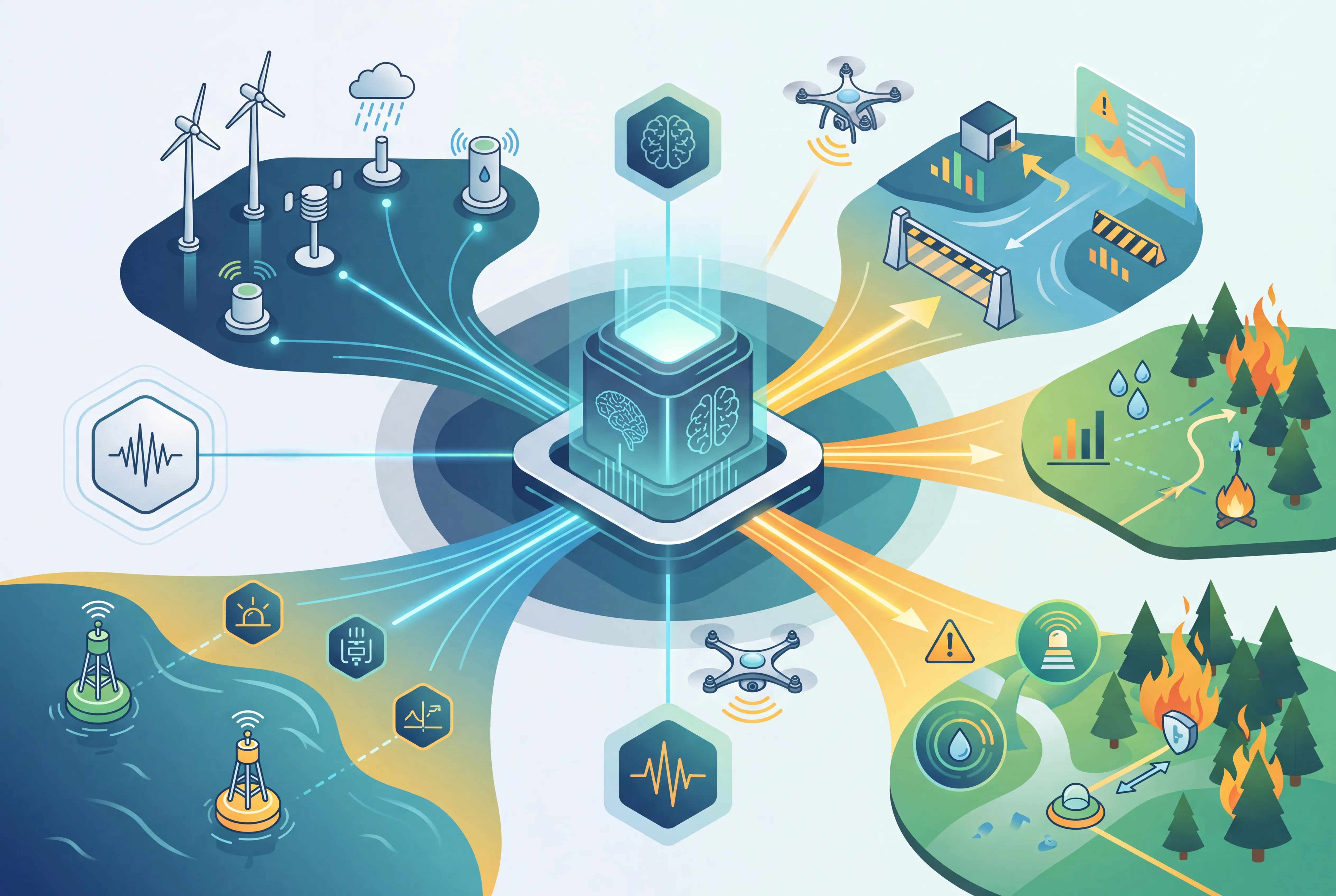
Alertis Private Limited is a technology startup based in Dehradun, Uttarakhand, that specializes in Internet of Things (IoT) solutions designed for real-time monitoring and early warning systems. The company integrates smart sensors with AI analytics to detect critical environmental threats such as landslides, floods, forest fires, and structural vulnerabilities. By turning raw data into actionable insights, Alertis aims to safeguard human lives, essential infrastructure, and the natural environment.
In an era where climate change is increasing the frequency and intensity of natural disasters, traditional observation methods are often too slow or inefficient to prevent significant damage. Alertis bridges this gap by providing a proactive layer of security. Instead of responding after a crisis, their systems are designed to provide the lead time necessary for authorities and communities to react effectively, effectively changing the paradigm from reactive disaster management to preventative resilience.
Market Analysis: Industry Trends and Target Audience
The target audience for Alertis Private Limited includes municipal governments, disaster management agencies, large-scale infrastructure projects (like dams, bridges, and tunnels), and forestry departments. These entities face immense pressure to maintain safety standards while minimizing economic loss from unpredictable environmental events.
Several industry trends are fueling the growth of this sector. First, there is a global increase in investment toward smart city infrastructure and climate resilience. Governments worldwide are prioritizing technology-driven monitoring systems to replace legacy, manual inspection methods. Second, the cost of IoT sensors and satellite connectivity has decreased significantly, making it economically viable to deploy large-scale networks in previously hard-to-reach areas. Finally, the integration of AI allows for the filtering of false positives from sensor noise, ensuring that alerts are not only timely but also accurate, which is a significant pain point for existing alarm systems.
Competitive Landscape: How Alertis Private Limited Compares to Existing Alternatives
Alertis faces competition from both traditional engineering consultants who use manual reporting methods and large multinational corporations providing satellite-based monitoring. Unlike manual methods, which are periodic and labor-intensive, Alertis provides continuous, automated monitoring. Compared to high-cost global satellite providers, Alertis offers localized, high-density sensor networks that can capture granular data specific to a micro-climate or a specific structural asset.
Key Advantages of Alertis Private Limited
- Granular Data Collection: By deploying physical IoT sensors at the source (e.g., specific slopes for landslides), the company captures localized data that satellite imaging might miss due to cloud cover or lack of resolution.
- AI-Driven Analytics: The platform doesn't just push raw sensor data; it filters and interprets the data to identify patterns that precede a disaster, such as micro-movements in soil or shifts in temperature.
- Actionable Insights: By delivering simplified alerts to stakeholders, they reduce the technical burden on non-expert decision-makers during emergency situations.
- Scalability: The modular nature of IoT hardware allows for phased deployment, enabling smaller projects to expand their monitoring coverage as budget permits.
Limitations and Market Challenges
- Physical Hardware Durability: Maintaining electronic sensors in harsh, exposed environments (e.g., deep forests or high-altitude landslides) poses a significant engineering and logistical challenge.
- Connectivity Infrastructure: Many disaster-prone areas lack reliable cellular or internet coverage, necessitating advanced mesh-networking or satellite backhaul solutions that increase project costs.
- Long Sales Cycles: Selling to government departments and large public utility bodies often involves lengthy procurement processes and high barriers to entry regarding compliance and certifications.
- Liability Concerns: Developing early warning systems carries immense responsibility; any failure in the system can have catastrophic real-world consequences, requiring rigorous testing and legal safeguards.
AI Startup Validation Score & Assessment
- Problem Significance: 95/100 - Protecting human life from natural disasters is a mission-critical, high-value problem with global demand.
- Market Demand: 85/100 - Increasing climate volatility makes early warning systems a necessity for government budgets and infrastructure risk management.
- Innovation Level: 75/100 - While IoT and AI are established technologies, the application in localized disaster detection remains a competitive and evolving niche.
- Business Model Potential: 70/100 - Leveraging B2B and B2G (Government) contracts provides steady revenue but may be limited by long, bureaucratic procurement cycles.
- Scalability Opportunity: 80/100 - Once the core hardware and software stack is refined, it can be deployed to various geographies with minimal customization.
- Competitive Advantage: 65/100 - The sector is crowded with engineering firms and tech giants, making it vital for Alertis to maintain a strong proprietary edge in sensor reliability.
- Long-Term Sustainability: 75/100 - Infrastructure safety is a permanent need, ensuring consistent demand as climate-related risks continue to rise.
Overall Validation Score: 78/100
Strategic Lessons for Aspiring Entrepreneurs
Founders in the deep-tech or climate-tech space can learn much from the approach taken by Alertis Private Limited. One primary lesson is the importance of domain expertise; the ability to combine hardware (sensors) with software (AI) creates a defensible "moat" that pure-software competitors lack. Another lesson is the value of focusing on specific verticals first—such as landslide monitoring—before attempting to solve every environmental issue, as specialized expertise builds trust with regulatory bodies and procurement officers.
Opportunities for Concept Improvement & Expansion
To further grow, Alertis could explore partnerships with insurance companies. If their sensor data can accurately predict risks for infrastructure or real estate, insurance firms might subsidize the installation costs in exchange for lower risk premiums. Additionally, creating a "Digital Twin" platform—a virtual model of the infrastructure being monitored—could allow clients to perform stress tests and simulate various disaster scenarios, adding significant value beyond simple alerts.
Opportunities and Risks of Starting a Similar Business
Opportunities
New founders have a vast opportunity to address the "last mile" of data collection. While satellite data is abundant, high-resolution, on-the-ground data is still scarce. Furthermore, building hardware-agnostic software that can plug into any existing sensor network is a scalable business model that avoids the logistical nightmares of physical installation.
Risks
Entry barriers include high initial R&D costs for hardware and the need for deep domain expertise. Investors often shy away from capital-intensive hardware businesses unless there is a clear path to volume. Moreover, data accuracy in a life-safety application requires massive amounts of historical data for training models, which can be hard to acquire for new startups.
Frequently Asked Questions
FAQ 1: What is the main problem that Alertis Private Limited addresses?
Alertis solves the problem of delayed emergency response by providing real-time IoT-based monitoring. By detecting environmental shifts early, it provides authorities with critical minutes or hours to act, preventing loss of life and damage to infrastructure.
FAQ 2: Who are the primary target customers for this type of business?
Primary customers include government agencies responsible for disaster management, municipal corporations, forestry and environmental conservation departments, and private entities managing critical infrastructure like highways, bridges, and dams.
FAQ 3: What is the typical revenue model for a startup like Alertis Private Limited?
Startups in this space typically use a hybrid model: an initial setup/installation fee for hardware and software deployment, followed by a recurring SaaS (Software-as-a-Service) fee for ongoing monitoring, data analytics, and cloud storage maintenance.
FAQ 4: How can someone validate a similar startup idea?
Validating a deep-tech idea requires verifying market demand through expert interviews and assessing the technical feasibility of your prototype. You need to prove that stakeholders are willing to pay for your solution. Using ideation.biz can help you perform an initial market demand analysis and SWOT study to identify if your specific niche has room for growth before you commit to building expensive hardware.
FAQ 5: What factors should be analyzed before launching a new venture?
Key factors include market size, the intensity of competitor activity, your potential unique selling proposition (USP), and the regulatory hurdles in your target sector. Before diving in, explore ideation.biz to gain a structured perspective on your business plan, potential risks, and the competitive landscape of your chosen market.
FAQ 6: How can founders identify hidden risks in their business concept?
Founders often overlook risks like supply chain volatility, long procurement cycles, or technical failure points. By using the comprehensive analysis tools at ideation.biz, you can generate a tailored risk assessment that highlights the threats specific to your industry, allowing you to build a more robust, investor-ready business model from the start.
Conclusion
Alertis Private Limited represents a crucial intersection of climate tech and industrial safety. By leveraging IoT and AI to provide timely data, they demonstrate how startups can address significant societal challenges while building a sustainable business. Their model highlights the critical importance of marrying complex hardware with intelligent software to provide real-world value in life-safety applications.
Are you building a startup in the climate-tech or IoT space? Don't let uncertainty derail your progress. Use the ideation.biz validation tool to rigorously test your idea, analyze competitor benchmarks, and uncover the risks that could impact your launch. Get the clarity you need to move from an idea to a validated market solution today.
Validate Your Startup Idea Before You Invest Time & Money
Get instant market insights, competitive analysis, and strategic recommendations for your next venture.
Related Blogs
More insights on validation and entrepreneurship.