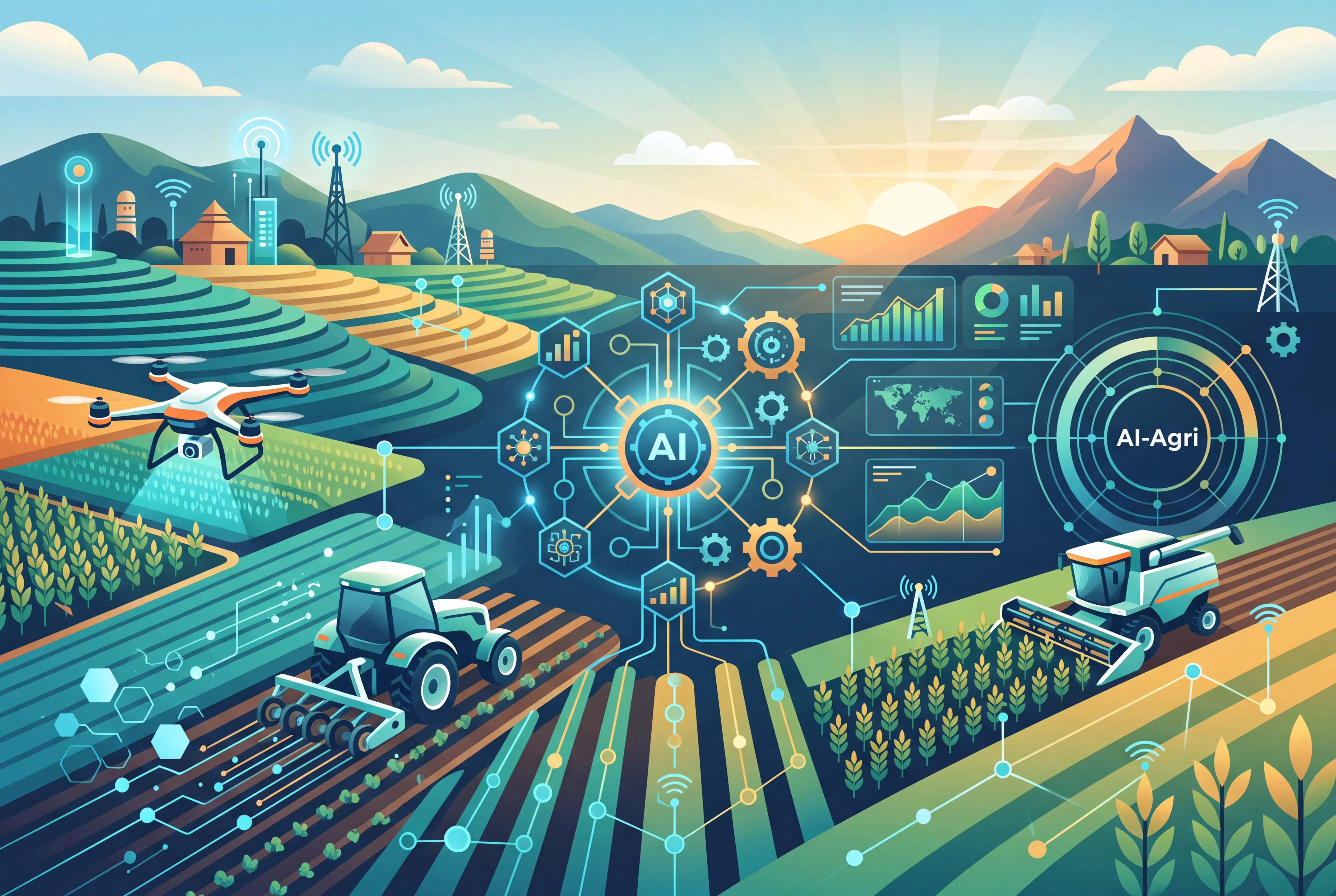
AGRISYNK TECHNOLOGIES: Solving Micro-Logistics Gaps in Agriculture
Discover how AGRISYNK TECHNOLOGIES is transforming micro-logistics in agriculture through their bidding-based platform, ZUBER. Learn lessons for startup success.

Introduction: Who is AGRISYNK TECHNOLOGIES PRIVATE LIMITED and What Problem Do They Solve?
AGRISYNK TECHNOLOGIES PRIVATE LIMITED is an agri-tech startup based in Shopian, Jammu and Kashmir, that operates ZUBER, a bidding-based micro-logistics marketplace. The platform bridges the gap between apple farmers, local traders, and independent auto or mini-truck drivers. By replacing inefficient, fragmented transport networks with a digital bidding model, the startup addresses high costs and supply chain friction for agricultural logistics.
Agricultural logistics in regions like Shopian is often plagued by a lack of transparency and high reliance on middlemen. Apple farmers, who operate under tight harvest timelines, frequently struggle to find affordable, reliable transportation for their produce. Simultaneously, local drivers face significant idle time, waiting for work that may never come or depending on informal, inefficient networks. ZUBER aims to structure this chaotic environment, ensuring that farmers get their goods to market at competitive rates while drivers optimize their vehicle utilization.
This platform serves as a classic example of platform-based efficiency in an unorganized sector. By digitizing the dispatch process, the startup not only optimizes price discovery but also formalizes a segment of the economy that is critical to the regional agricultural output. The core value proposition is simple: reduce friction by connecting supply (drivers) and demand (farmers) directly through a transparent, technology-enabled interface.
Market Analysis: Industry Trends and Target Audience
The target audience for AGRISYNK TECHNOLOGIES is twofold: the agricultural producers (apple farmers and small-scale traders) and the service providers (auto-rickshaw and mini-truck operators). Farmers in the Kashmir valley are highly sensitive to logistical costs, as high transport fees directly erode their thin profit margins during the short, intensive harvest window. Traders, meanwhile, require speed and consistency to maintain the freshness of perishable goods.
Two major industry trends support this business model. First, the rapid digitization of rural economies, driven by increased smartphone penetration and mobile internet availability, makes app-based platforms viable in previously underserved regions. Second, there is a systemic shift toward "Uberization" of logistics in Tier-2 and Tier-3 cities. This trend involves applying proven aggregator models to specific, localized problems where traditional courier services or large-scale trucking firms fail to provide a cost-effective solution for short-haul, small-load logistics.
The logistical bottleneck in the apple industry is particularly significant because of the physical terrain of Jammu and Kashmir. The need for precise coordination between orchard location and cold storage or market centers is immense. By targeting these micro-logistics segments, AGRISYNK is positioning itself to capture a significant share of the regional transport market by addressing the specific pain points of time-sensitive, perishables-focused agricultural supply chains.
Competitive Landscape: How AGRISYNK TECHNOLOGIES PRIVATE LIMITED Compares to Existing Alternatives
Traditional logistics in this sector rely on manual coordination, often involving "middlemen" or transport contractors who charge significant commissions. In comparison, AGRISYNK TECHNOLOGIES provides a digital-first approach. Other competitors in the broader logistics market include general-purpose transport apps, but these often lack the regional specialization or deep integration with the specific needs of local agricultural communities.
Key Advantages of AGRISYNK TECHNOLOGIES PRIVATE LIMITED
- Competitive Bidding Model: Unlike fixed-rate platforms, the bidding mechanism ensures that price discovery is dynamic, benefiting the farmer who can choose the most economical bid.
- Efficiency for Drivers: By reducing idle time, drivers increase their daily earnings, which creates a loyal supply base for the platform.
- Transparency: Users can view ratings and choose drivers based on preferences, which mitigates the risk of dealing with unreliable or unknown operators.
- Regional Focus: A hyper-local approach allows the company to understand the specific topographical and seasonal challenges of Shopian, which national players often overlook.
Limitations and Market Challenges
- Critical Mass Requirement: Marketplace models are notorious for the "chicken and egg" problem; if there aren't enough drivers, farmers won't use it, and vice versa.
- Infrastructure Reliability: In mountainous or rural areas, consistent internet connectivity can be a hurdle for mobile-app adoption among older or non-tech-savvy farmers.
- Informal Resistance: Middlemen whose income depends on the current opaque system may actively resist or sabotage the adoption of transparent digital platforms.
AI Startup Validation Score & Assessment
- Problem Significance: 85/100 - The logistical friction in the agricultural sector is a real, high-impact problem that directly affects the income of primary producers.
- Market Demand: 80/100 - Strong demand exists for cost-effective logistics, especially during peak harvest seasons where existing supply is insufficient.
- Innovation Level: 65/100 - The bidding-marketplace model is a proven concept globally, but applying it to local agricultural micro-logistics shows smart execution.
- Business Model Potential: 75/100 - A commission-based model on successful transactions is scalable, provided the transaction volume justifies the platform cost.
- Scalability Opportunity: 70/100 - Highly replicable in other agricultural regions, though each new market requires establishing local trust and driver networks.
- Competitive Advantage: 60/100 - Dependent on strong regional network effects rather than proprietary technology.
- Long-Term Sustainability: 70/100 - Likely to remain stable if the platform maintains fair pricing and high-quality service, avoiding exploitation of either side.
Overall Validation Score: 72/100
Strategic Lessons for Aspiring Entrepreneurs
- Solve for Local Friction First: AGRISYNK succeeds because it focuses on a tangible pain point—expensive, unreliable transport—in a specific geography. Entrepreneurs should avoid broad, vague solutions and instead target deep, localized problems where they can offer clear value immediately.
- Platform Trust is Currency: In marketplace models, ratings, transparency, and driver vetting are not optional features; they are the core product. Users will only migrate from their familiar (albeit inefficient) traditional networks if they trust the new system completely.
- Validate Before You Scale: The core strength of the ZUBER model is that it validates the market need for better logistics through every transaction. Entrepreneurs must ensure their business model provides actual, measurable efficiency gains, rather than just adding a digital layer to an already broken process.
Opportunities for Concept Improvement & Expansion
- Integrated Financing: Incorporate micro-lending or "pay-later" options for farmers who may not have immediate cash for transport during the harvest phase.
- Cold Chain Partnerships: Expand into refrigerated micro-vans to specifically target the high-value, perishable apple market, further increasing the value per load.
- Real-time Analytics for Traders: Offer insights on market price trends or demand surges in different trading hubs to help farmers and traders optimize their shipping routes.
Opportunities and Risks of Starting a Similar Business
Opportunities
Building a micro-logistics platform allows for the formalization of unorganized industries. Opportunities exist in niche sectors like waste management, construction supplies, or local retail delivery, where traditional transport remains costly and inefficient. A tech-driven aggregator can capture a significant "middle" share of the market by simply being more reliable and transparent than the fragmented informal networks that currently dominate these spaces.
Risks
Entry barriers for this type of business are often social rather than technical. Existing middleman networks are powerful and deeply entrenched. Regulatory hurdles in transportation can also complicate operations. Additionally, the risk of "disintermediation," where drivers and farmers meet once through the app and then bypass the platform for future transactions to avoid fees, is a constant threat that must be addressed through platform value-adds and loyalty structures.
Frequently Asked Questions
FAQ 1: What is the main problem that AGRISYNK TECHNOLOGIES addresses?
AGRISYNK addresses the inefficiency, high cost, and lack of transparency in agricultural micro-logistics, specifically for apple farmers in regions like Shopian who struggle to find reliable, affordable transport during harvests.
FAQ 2: Who are the primary target customers for this type of business?
Primary customers include fruit growers, farmers, local small-scale traders, and independent vehicle owners (auto and mini-truck drivers) who want to maximize their vehicle utilization and income.
FAQ 3: What is the typical revenue model for a startup like AGRISYNK TECHNOLOGIES?
Typically, such platforms earn revenue through a commission-based fee on each successful transaction matched through the app, often charged as a percentage of the final transport bid.
FAQ 4: How can someone validate a similar startup idea?
Validating a marketplace startup requires testing the "chicken-and-egg" demand-supply balance. You can use platforms like ideation.biz to perform market research and competitor analysis to see if your target region has enough density to support such a model before committing resources to development.
FAQ 5: What factors should be analyzed before launching a new venture?
Entrepreneurs should focus on market size, the intensity of the specific problem, and competitive saturation. A tool like ideation.biz can provide a structured roadmap, SWOT analysis, and risk assessment to ensure your concept has real demand before you start building.
FAQ 6: How can founders identify hidden risks in their business concept?
Founders often miss operational bottlenecks or regulatory hurdles. Using an AI-driven validation tool like ideation.biz helps uncover these risks by simulating real-world market outcomes, providing a comprehensive report that helps you refine your strategy before the actual launch.
Conclusion
AGRISYNK TECHNOLOGIES PRIVATE LIMITED serves as a prime example of how digital innovation can bring structure to unorganized local markets. By focusing on the specific logistical challenges faced by farmers and drivers, they offer a blueprint for success in the agri-tech sector. However, the path to sustained growth lies in overcoming the inherent challenges of trust and network density. For those inspired to build similar solutions, validation is the first step toward avoiding common pitfalls. Don't leave your startup's success to chance; use the ideation.biz validation tool to analyze your own ideas, test for market demand, and gain the strategic insights needed to build a venture that truly scales.
Validate Your Startup Idea Before You Invest Time & Money
Get instant market insights, competitive analysis, and strategic recommendations for your next venture.
Related Blogs
More insights on validation and entrepreneurship.