How Agri Waste Private Limited is Turning Farm Waste Into Sustainable Income
Explore the innovative model of Agri Waste Private Limited. Learn how they turn agricultural waste into sustainable products and the lessons for green startups.
Introduction: Who is Agri Waste Private Limited and What Problem Do They Solve?
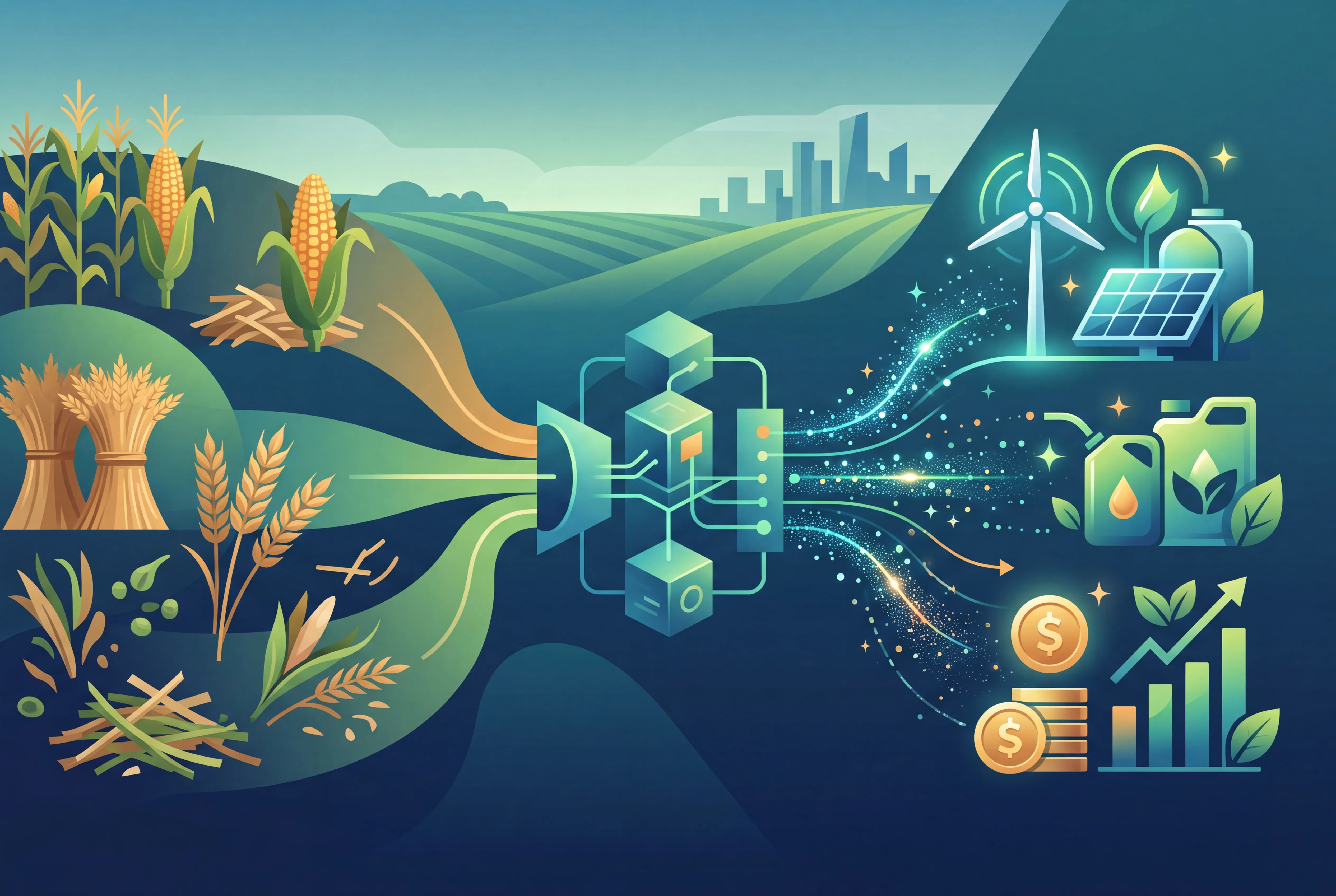
Agri Waste Private Limited is a startup based in Jalgaon, Maharashtra, that tackles the environmental crisis of open agricultural waste burning. By providing farmers with affordable, localized processing technology, they convert field waste into valuable raw materials like biocharcoal for incense sticks. They aim to reduce pollution while creating a circular economy model that serves both the planet and the agricultural community.
Agricultural waste disposal remains one of the most pressing environmental challenges globally. Farmers often resort to burning crop residues because they lack efficient, low-cost alternatives, leading to severe air pollution and soil degradation. Agri Waste Private Limited addresses this by introducing affordable, decentralized processing units priced at approximately 15,000 rupees. This model enables farmers to become producers rather than just waste generators, transforming a liability into a sustainable income stream.
Beyond environmental protection, the startup envisions a future of plastic-free alternatives, with products like biodegradable tableware, vegan thermocol, and vegan leather. Their approach integrates rural empowerment with industrial sustainability, demonstrating that solving global climate issues can start with localized, high-impact manufacturing.
Market Analysis: Industry Trends and Target Audience
The target audience for Agri Waste Private Limited includes small-scale farmers in rural areas, rural entrepreneurs, and manufacturers of sustainable consumer goods. These stakeholders are primarily concerned with reducing operational costs, diversifying their revenue streams, and adhering to growing environmental regulations. As consumers shift away from synthetic materials, the demand for bio-based alternatives is surging.
Several key trends support this business model:
- The Rise of Circular Economy: There is a significant global movement toward repurposing industrial and agricultural byproducts into new raw materials, minimizing waste generation.
- Stricter Environmental Regulations: Governments are increasingly penalizing open stubble and residue burning, forcing farmers to seek alternative disposal methods.
- Demand for Sustainable Consumer Goods: The incense, packaging, and lifestyle product markets are actively seeking non-toxic, vegan, and biodegradable components to satisfy eco-conscious buyers.
By positioning their machinery as both a solution for farmers and a supplier for manufacturing sectors, the company taps into both the supply-side (waste management) and demand-side (green materials) of the agricultural economy.
Competitive Landscape: How Agri Waste Private Limited Compares to Existing Alternatives
Traditional waste management solutions often rely on large-scale biomass plants that require significant logistical infrastructure and transportation costs. Agri Waste Private Limited competes by decentralizing the production process, allowing the value addition to happen directly at the source—the farm.
Key Advantages of Agri Waste Private Limited
- Cost-Effectiveness: A 15,000 rupee entry barrier is exceptionally low for agricultural hardware, making it accessible to individual farmers.
- Low Environmental Impact: By processing waste locally, they minimize the carbon footprint associated with transporting bulky agricultural residues.
- Diversified Product Pipeline: Moving beyond biocharcoal into vegan leather and biodegradable thermocol positions the company as a material science innovator rather than a single-product manufacturer.
- Circular Impact: The company directly addresses the root cause of air pollution (open burning) rather than just treating the symptoms.
Limitations and Market Challenges
- Scalability of Rural Distribution: Reaching millions of farmers across India requires a massive sales and support network.
- Quality Control: Maintaining consistent quality when processing varied types of agricultural residues from different farms can be technically challenging.
- Awareness and Adoption: Convincing traditional farmers to shift from burning to processing requires intensive education and trust-building.
AI Startup Validation Score & Assessment
- Problem Significance: 95/100 - Open burning of agricultural waste is a massive, multi-continental environmental health crisis.
- Market Demand: 85/100 - High, as both government regulation and consumer preference for sustainability increase.
- Innovation Level: 80/100 - Simple, affordable, and decentralized machine design is a clever solution to a complex logistics problem.
- Business Model Potential: 75/100 - Strong potential in both hardware sales (the machines) and potential raw material supply contracts.
- Scalability Opportunity: 70/100 - Hardware-based businesses face significant logistical and maintenance challenges at scale.
- Competitive Advantage: 75/100 - High localized cost advantage, but vulnerable to copycats if the technology isn't protected.
- Long-Term Sustainability: 80/100 - The shift toward green materials is a long-term trend, not a fad.
Overall Validation Score: 80/100
Strategic Lessons for Aspiring Entrepreneurs
- Solve for the Local Pain Point: Agri Waste Private Limited succeeded by identifying a specific, solvable problem that the farmer faces (waste disposal) rather than just focusing on the end-market product.
- Hardware-as-a-Gateway: By providing the machinery, the company builds a network of producers who rely on their technology, creating a sticky ecosystem.
- Start Simple, Diversify Later: Focusing on one initial output (biocharcoal) before attempting more complex materials like vegan leather allows the team to master the supply chain first.
Opportunities for Concept Improvement & Expansion
- Develop a Subscription Model: Instead of just selling machines, they could offer maintenance or buy-back guarantees on the processed charcoal, ensuring consistent revenue.
- Strategic Partnerships with FMCG Brands: Partnering with major incense stick manufacturers to exclusively source their biocharcoal could provide massive sales velocity.
- Data-Driven Impact Tracking: Helping farmers quantify their carbon credits through the use of their machines could create an entirely new, high-margin revenue stream.
Opportunities and Risks of Starting a Similar Business
Opportunities
- Government Subsidies: Many regions offer heavy incentives for waste-to-wealth technologies.
- Global Export Market: Sustainable, biodegradable alternatives to plastic are in high demand in European and North American markets.
Risks
- Maintenance Logistics: Hardware in rural settings requires robust, localized support. Failing to provide this can lead to machine abandonment.
- Financial Hurdles: Securing capital for individual farmers to purchase even affordable machinery can require financing partnerships.
Frequently Asked Questions
FAQ 1: What is the main problem that Agri Waste Private Limited addresses?
The startup addresses the environmental and health hazards caused by the open burning of agricultural crop residues, providing an affordable way for farmers to process waste into marketable, eco-friendly goods.
FAQ 2: Who are the primary target customers for this type of business?
The primary customers are small-to-medium-scale farmers, rural cooperatives, and local entrepreneurs interested in sustainable manufacturing of bio-based materials.
FAQ 3: What is the typical revenue model for a startup like Agri Waste Private Limited?
Revenue is typically generated through the sale of processing equipment, the sale of the produced bio-raw materials to third-party manufacturers, and potentially future licensing of their material science IP.
FAQ 4: How can someone validate a similar startup idea?
Validation involves testing demand, analyzing potential competition, and identifying critical risks early. Before investing in manufacturing, you should use tools like ideation.biz to evaluate your market signals and SWOT profile, ensuring your product is something people actually want to purchase.
FAQ 5: What factors should be analyzed before launching a new venture?
Key factors include market size, regulatory environment, customer acquisition costs, and competitive barriers. Using an analytical tool like ideation.biz can help you objectively score these factors, preventing you from sinking capital into an unviable concept.
FAQ 6: How can founders identify hidden risks in their business concept?
Founders should conduct a formal SWOT analysis and scenario testing. You can use platforms like ideation.biz to identify industry-specific risks, such as supply chain bottlenecks or adoption friction, before they manifest as operational failures.
Conclusion
Agri Waste Private Limited demonstrates the potential for combining rural agricultural livelihoods with sophisticated industrial goals. By turning agricultural waste into a valuable commodity, they address both the environmental cost of farming and the need for sustainable material innovation. Their trajectory highlights that successful startups often start by solving a very real, very messy problem at the grassroots level.
If you have a business idea that aims to solve a meaningful problem, don't wait to guess if it will work. Use the ideation.biz validation tool to analyze your market, understand your competition, and refine your business plan based on real-world data today.
Validate Your Startup Idea Before You Invest Time & Money
Get instant market insights, competitive analysis, and strategic recommendations for your next venture.
Related Blogs
More insights on validation and entrepreneurship.