AGMOVE ROBOTICS: Revolutionizing Indian Agriculture with Smart Robotics
Analyze the impact of AGMOVE ROBOTICS on Indian agriculture, exploring their business model, market opportunities, and key lessons for aspiring hardware entrepreneurs.
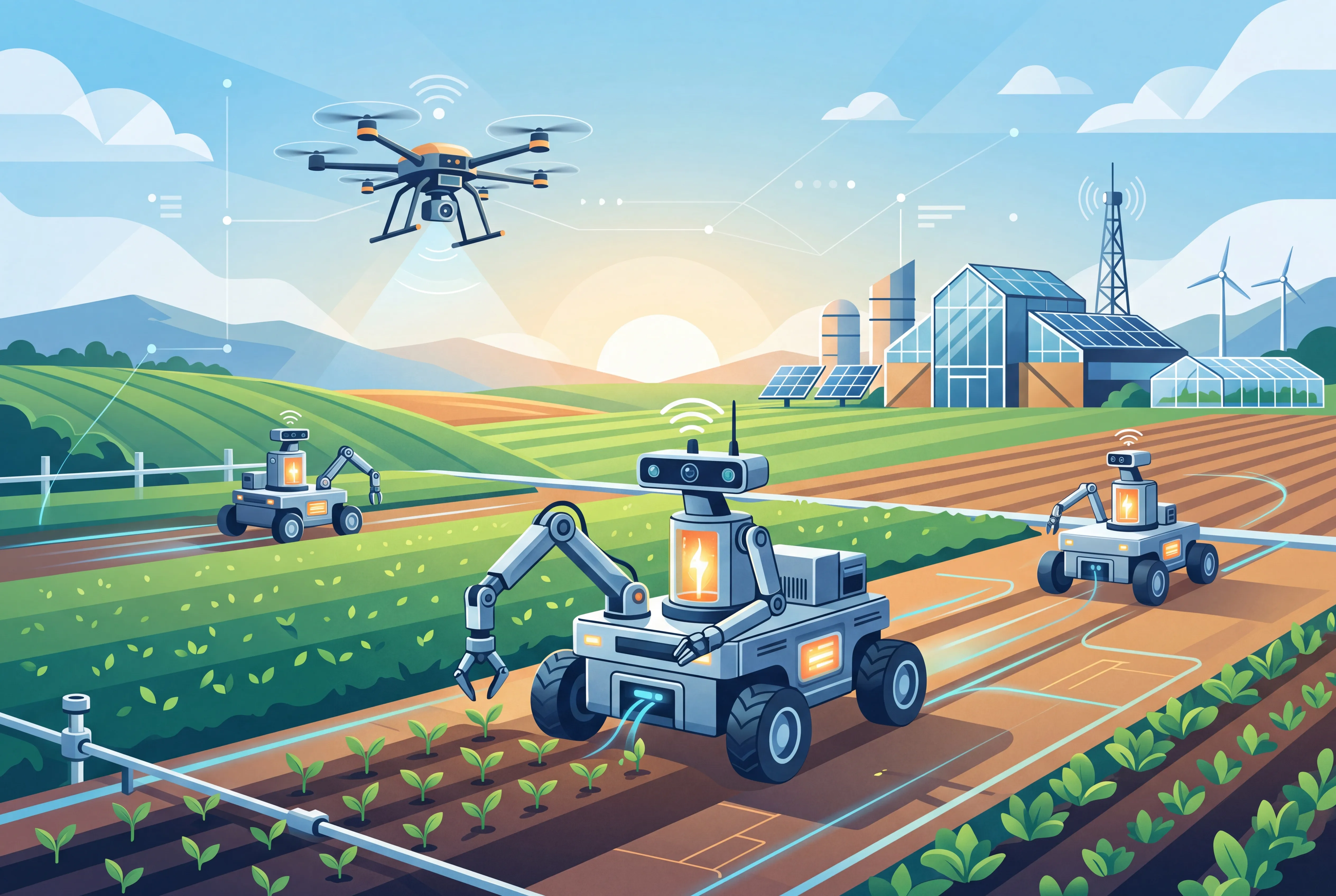
Introduction: Who is AGMOVE ROBOTICS INDIA PRIVATE LIMITED and What Problem Do They Solve?
AGMOVE ROBOTICS INDIA PRIVATE LIMITED is a Bengaluru-based agri-tech startup focused on bridging the efficiency gap in Indian farming through multi-utility, women-friendly robotic equipment. By addressing critical labor shortages and low productivity in rural agriculture, they provide localized machinery that simplifies complex intercultural tasks. Their mission centers on making smallholder farming more sustainable and cost-effective through modern engineering.
The agricultural sector in India remains the backbone of the economy, yet it faces systemic challenges. Small-scale farmers often rely on manual labor which is becoming increasingly scarce and expensive. Furthermore, traditional farming implements are frequently designed without considering the physical ergonomics of diverse farm workers, particularly women who constitute a significant portion of the agricultural labor force. AGMOVE ROBOTICS tackles these hurdles by introducing mechanized, user-friendly solutions that optimize crop yield and labor utilization.
By focusing on mechanical assistance for intercultural operations—the essential maintenance tasks like weeding and inter-row cultivation—AGMOVE is positioning itself at the nexus of traditional farming wisdom and modern robotics. This approach does not seek to replace human farmers but to augment their capabilities, ensuring that the heavy lifting and repetitive strain are managed by technology, thereby allowing labor to be redirected toward more strategic farm management activities.
Market Analysis: Industry Trends and Target Audience
The target audience for AGMOVE ROBOTICS comprises small-to-medium-scale landholders who are facing rising operational costs and decreasing labor availability. In the Indian context, this includes rural cooperative farming groups, self-help groups (SHGs) that support female farmers, and individual entrepreneurs looking to mechanize their holdings to achieve higher margins.
Key trends driving this sector include:
- The Mechanization Gap: While large-scale commercial farms have access to high-end machinery, the "long tail" of small farmers in India still relies on inefficient manual tools. There is a massive underserved market for compact, affordable, and multi-purpose machines.
- Inclusivity in Agriculture: There is an increasing governmental and social push to provide equipment that is safe and accessible for women, who perform a vast majority of labor in fields but have historically lacked access to specialized tools.
- Demand for Sustainable Productivity: As input costs rise and climate volatility impacts yield, farmers are looking for precision tools that can optimize resource usage, reduce waste, and increase the output per square foot of their land.
Competitive Landscape: How AGMOVE ROBOTICS INDIA PRIVATE LIMITED Compares to Existing Alternatives
Existing solutions in the agricultural space are typically polarized between heavy, expensive, fuel-guzzling tractors and primitive, back-breaking manual hand tools. AGMOVE fits into the intermediate space, providing "right-sized" robotics that offer the precision of automation without the massive capital expenditure required for industrial-grade agricultural fleets.
Key Advantages of AGMOVE ROBOTICS INDIA PRIVATE LIMITED
- Ergonomic Design: By specifically catering to women-friendly operation, the equipment is likely more lightweight, easier to handle, and safer, broadening the potential workforce.
- Multi-Utility Focus: Instead of buying separate machines for weeding, sowing, or soil aeration, farmers can invest in a single modular platform, which is a significant value proposition for cost-sensitive buyers.
- Localized Solutions: Operating out of Bengaluru allows for a deep understanding of regional crop cycles and soil conditions, which international competitors often lack when they attempt to enter the Indian market.
Limitations and Market Challenges
- Infrastructure Barriers: Reliable after-sales service and spare parts distribution in remote rural areas remain the biggest operational challenges for any hardware-based startup.
- Pricing Sensitivity: Despite the efficiency gains, initial purchase costs remain a major psychological and financial barrier for traditional farmers who are used to low-cost manual labor.
- Adoption Curves: Shifting from manual traditions to robotic solutions requires significant training and trust-building within rural communities.
AI Startup Validation Score & Assessment
- Problem Significance: 90/100 - Labor shortage and productivity issues are existential threats to modern small-scale farming.
- Market Demand: 85/100 - High demand for affordable mechanization across the vast Indian agrarian landscape.
- Innovation Level: 75/100 - Integrating robotics into rural field work is innovative, though the mechanical concepts are building on established engineering.
- Business Model Potential: 70/100 - B2B/B2C sales of hardware are capital intensive, requiring strong logistics and financing support.
- Scalability Opportunity: 65/100 - Scaling hardware requires physical manufacturing and distribution, which is slower than software scaling.
- Competitive Advantage: 70/100 - The focus on ergonomics and multi-utility provides a defensible niche against larger tractor OEMs.
- Long-Term Sustainability: 80/100 - As rural labor costs continue to rise, the ROI for these machines will only improve over time.
Overall Validation Score: 76.4/100
Strategic Lessons for Aspiring Entrepreneurs
- Solve for the Human Element: AGMOVE shows that design isn't just about technical capability; it’s about who the user is. By focusing on women-friendly design, they capture a massive, overlooked segment of the market.
- Don't Over-Engineer: In emerging markets, simple, modular, and repairable hardware often wins over complex, feature-heavy equipment that requires specialized technicians to maintain.
- Validate with Real-World Constraints: A successful business in a developing nation must account for the infrastructure limitations. Designing with the assumption of poor connectivity or rugged terrain is more effective than assuming ideal conditions.
Opportunities for Concept Improvement & Expansion
- Subscription/Lease Model: To lower the barrier to entry, consider a 'Robot-as-a-Service' (RaaS) model where farmers rent the equipment for the specific duration of the planting or harvest season.
- Digital Integration: Adding IoT sensors to the robots could turn them into data-gathering tools, providing farmers with soil health analytics, which creates an additional revenue stream through subscription-based agronomy data.
- Community Hubs: Establishing local service and training centers can help build community trust and act as a natural distribution channel for new products.
Opportunities and Risks of Starting a Similar Business
Opportunities
- The shift toward organic and precision farming creates a need for smaller, more precise machines that can navigate dense crop rows without damaging the plants, an area where massive tractors often fail.
- Government subsidies and rural development grants provide significant capital opportunities for startups that can prove a measurable impact on local farm productivity.
Risks
- Supply chain volatility, especially for electronics and high-grade steel, can quickly erode profit margins.
- High customer acquisition costs; convincing a traditional, risk-averse farmer to switch from time-tested methods requires long sales cycles and significant on-the-ground presence.
Frequently Asked Questions
FAQ 1: What is the main problem that AGMOVE ROBOTICS INDIA PRIVATE LIMITED addresses?
They primarily address labor shortages and the inefficiency of manual farming practices in small-scale Indian agriculture by providing accessible, multi-utility, and ergonomic robotic equipment.
FAQ 2: Who are the primary target customers for this type of business?
Small and medium-scale landholders, farmer cooperatives, and women-led self-help groups who need affordable, easy-to-use mechanization for daily agricultural tasks.
FAQ 3: What is the typical revenue model for a startup like AGMOVE ROBOTICS INDIA PRIVATE LIMITED?
Typical models include direct sales of machinery, optional service and maintenance contracts, and potentially 'Robot-as-a-Service' (RaaS) rental schemes that reduce upfront costs for the farmer.
FAQ 4: How can someone validate a similar startup idea?
Validating a hardware startup requires deep market immersion. You must talk to end-users about their specific pain points and calculate the 'time-to-payback' for your equipment. Using a tool like ideation.biz can help you structure this validation, providing competitive research and risk analysis to ensure you don't build a machine that nobody wants.
FAQ 5: What factors should be analyzed before launching a new venture?
Key factors include market size, the intensity of the competitor landscape, the regulatory environment (especially for agricultural hardware), and the unit economics of your product. Before diving into development, running your concept through ideation.biz can highlight hidden risks and provide a roadmap for your launch strategy based on real market data.
FAQ 6: How can founders identify hidden risks in their business concept?
Founders can identify risks by stress-testing their business model against different market scenarios, such as supply chain failures or high customer acquisition costs. Engaging with platforms like ideation.biz allows you to run an AI-powered SWOT analysis that identifies these potential pitfalls before you invest significant time and capital.
Conclusion
AGMOVE ROBOTICS represents a critical shift in how we view the intersection of technology and rural livelihood. By focusing on usability and versatility, they are not just selling machines—they are selling efficiency to those who need it most. As the agricultural landscape continues to evolve, companies that prioritize the human element alongside technical innovation will find themselves in a strong position. If you are sitting on an idea that you believe can solve a real-world problem, stop guessing if it will work. Validate your startup hypothesis with data-driven insights at ideation.biz and turn your vision into a reality with clarity and confidence.
Validate Your Startup Idea Before You Invest Time & Money
Get instant market insights, competitive analysis, and strategic recommendations for your next venture.
Related Blogs
More insights on validation and entrepreneurship.