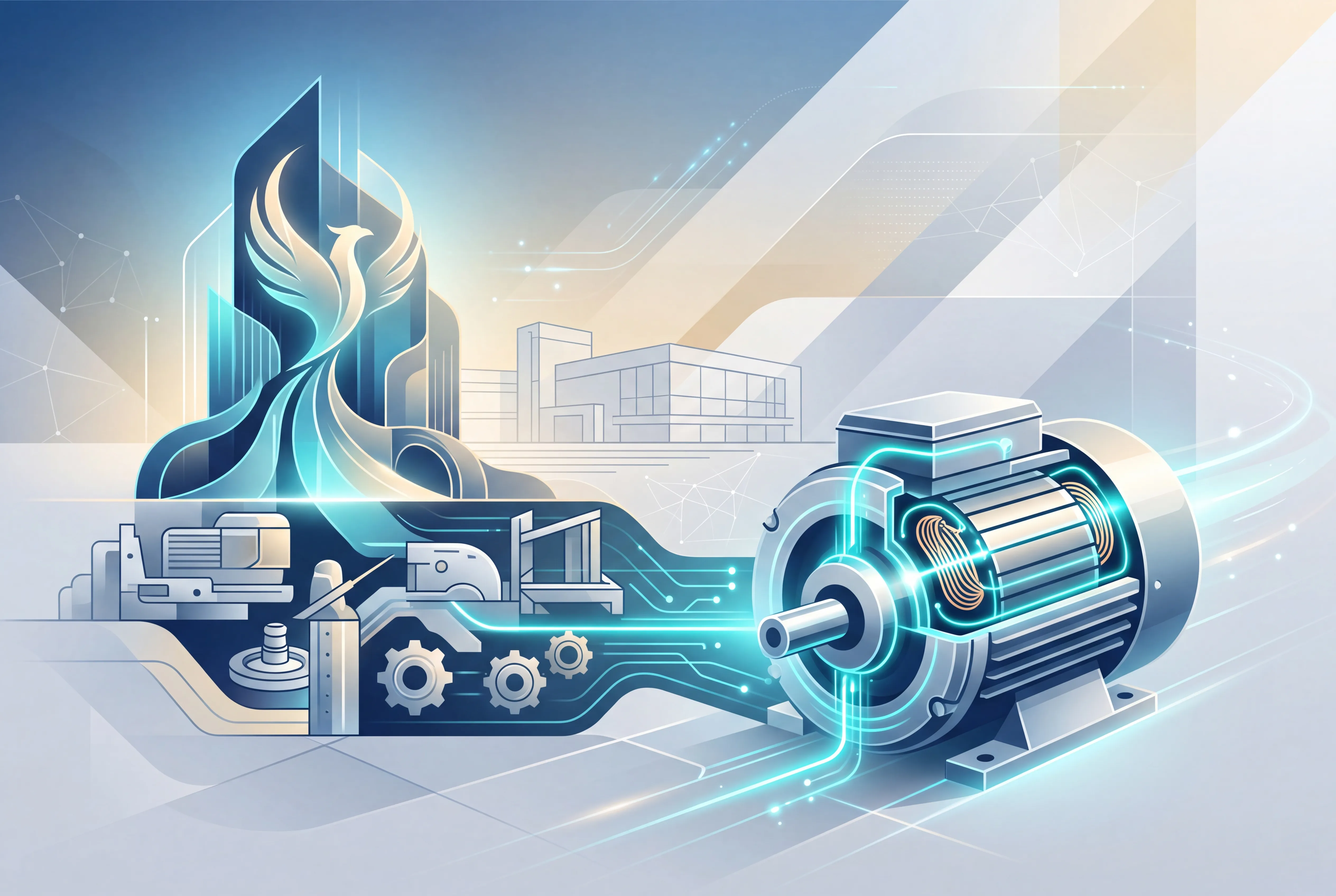
Agentik Technologies: Transforming Manufacturing Maintenance with AI
Explore Agentik Technologies' approach to AI-powered maintenance with Dovient, and learn how they are streamlining manufacturing operations.
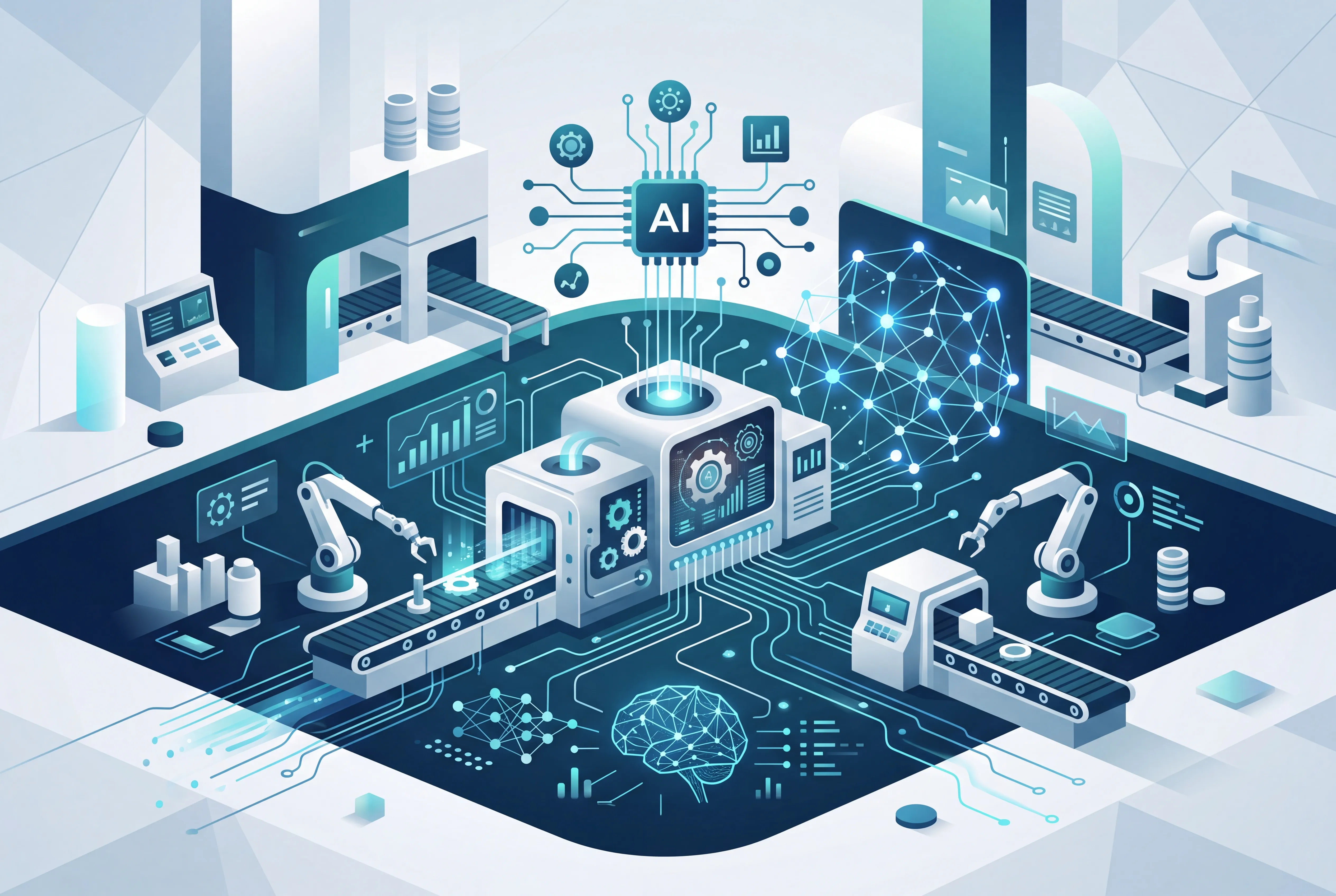
Introduction: Who is Agentik Technologies Private Limited and What Problem Do They Solve?
Agentik Technologies Private Limited is a specialized IT services firm focusing on the manufacturing sector through its flagship product, Dovient. Dovient acts as an AI-powered Maintenance Copilot, designed to automate preventive maintenance and streamline breakdown management. By generating automated Standard Operating Procedures (SOPs), it helps manufacturing teams improve operational consistency and reduce machine downtime.
In an industry where every minute of production downtime represents a significant financial loss, maintenance managers often struggle with reactive workflows. Traditional maintenance processes are frequently documented in fragmented legacy systems or paper files, making knowledge retention difficult when personnel change. Agentik Technologies aims to bridge this gap by digitizing and automating the maintenance intelligence layer, ensuring that institutional knowledge is preserved and actionable.
The rise of Industry 4.0 has placed pressure on manufacturing plants to modernize their digital infrastructure. Agentik Technologies recognizes that while hardware sensors are common, the process-based decision-making aspect of maintenance remains a bottleneck. By focusing on a SaaS-based copilot model, they provide a scalable solution that integrates directly into the daily workflows of maintenance staff, transforming how teams react to production issues.
Market Analysis: Industry Trends and Target Audience
Agentik Technologies targets medium to large-scale manufacturing facilities that rely on complex machinery and complex maintenance schedules. Their primary audience consists of plant managers, maintenance heads, and operational directors who are looking to move away from reactive fire-fighting and toward predictive maintenance models. The current industry landscape is characterized by three major trends:
First, the skills gap in the manufacturing workforce is becoming more pronounced. As veteran engineers retire, companies struggle to pass down tribal knowledge regarding machine repairs. Solutions like Dovient provide a structured repository for this knowledge through automated SOPs, effectively acting as an intelligent assistant for junior technicians.
Second, there is a push toward digitalization in the "brownfield" manufacturing sector. Many factories are not fully automated, but they are increasingly adopting software tools to improve efficiency. Agentik Technologies fits perfectly into this space by providing high-value SaaS tools that do not require an immediate overhaul of heavy machinery.
Third, cost-consciousness is rising. Supply chain disruptions and inflation have pushed companies to maximize the lifespan of their existing assets. Preventive maintenance is no longer just a best practice; it is a financial necessity to avoid the catastrophic costs associated with unplanned production halts.
Competitive Landscape: How Agentik Technologies Compares to Existing Alternatives
Manufacturing maintenance software is a crowded market, featuring everything from legacy Enterprise Asset Management (EAM) suites to niche Computerized Maintenance Management Systems (CMMS). Agentik Technologies differentiates itself by leaning heavily into generative AI to simplify complex maintenance documentation and process management.
Key Advantages of Agentik Technologies
- Generative SOP Automation: Unlike traditional CMMS software that requires manual entry of every process, Dovient leverages AI to generate actionable SOPs, saving hours of administrative time.
- Reduced Learning Curve: Because the system is designed as a "copilot," it provides real-time guidance rather than just acting as a static database. This allows maintenance teams to act faster when a breakdown occurs.
- Operational Standardization: It forces a uniform approach to machine repair, ensuring that the "best way" to fix a specific machine is standardized across all shifts and teams.
Limitations and Market Challenges
- Change Management: Implementing AI-driven software in a factory floor environment is notoriously difficult due to resistance from legacy-minded staff.
- Integration Complexity: Connecting with existing, older ERP or PLC (Programmable Logic Controller) systems can be a massive hurdle that requires extensive technical support.
- Data Quality Dependence: The output quality of an AI agent is only as good as the input data. If a facility has poor historical maintenance records, the AI may require significant tuning before it becomes highly accurate.
AI Startup Validation Score & Assessment
- Problem Significance: 90/100 - Unplanned downtime is one of the highest expenses for manufacturers globally, making this a high-pain problem.
- Market Demand: 85/100 - The manufacturing sector is actively seeking digital transformation tools that don't require massive hardware investment.
- Innovation Level: 75/100 - While CMMS exists, the application of generative AI for SOP generation in this niche is a fresh, value-added approach.
- Business Model Potential: 80/100 - A SaaS-based subscription model in the B2B industrial space is highly lucrative and offers predictable recurring revenue.
- Scalability Opportunity: 85/100 - As a software solution, it can be deployed across various types of manufacturing plants with minimal geographic limitations.
- Competitive Advantage: 70/100 - The advantage lies in the specificity of the AI's training on maintenance data, but it must defend against larger ERP vendors adding similar features.
- Long-Term Sustainability: 75/100 - Building deep integrations into industrial workflows creates high switching costs, which is excellent for retention.
Overall Validation Score: 80/100
Strategic Lessons for Aspiring Entrepreneurs
-
Solve a Niche Problem with High Financial Impact: Agentik Technologies does not try to manage the whole factory; they focus on the high-cost pain point of maintenance downtime. Entrepreneurs should look for "bleeding necks"—specific, recurring, and costly problems—rather than broad operational tools.
-
Design for the User, Not Just the Executive: In industrial settings, the people using the tool (technicians) are often different from the people buying it (directors). Creating a tool that actually saves the technician time ensures high adoption rates, which in turn justifies the investment for management.
-
Leverage AI for Workflow, Not Just Analytics: Predictive analytics are common, but the generative capacity to create SOPs turns the AI from a dashboard into an active member of the maintenance team. Think about how AI can output tangible, usable assets that simplify work.
Opportunities for Concept Improvement & Expansion
- Voice Integration: Adding voice-activated maintenance logs would be a breakthrough for technicians who have dirty hands and cannot type on screens during urgent repairs.
- Predictive Hardware Connectors: Integrating with IoT sensor data could allow the software to automatically trigger an SOP the moment an anomaly is detected, creating a true closed-loop predictive system.
- Offline Capability: Factories often have poor connectivity. Creating a mobile-first, offline-ready version of the copilot would increase accessibility in rugged industrial environments.
Opportunities and Risks of Starting a Similar Business
Opportunities
- Targeting the underserved SME manufacturing market that cannot afford multi-million dollar SAP or IBM implementations.
- Focusing on specific verticals like food processing or pharmaceutical manufacturing where strict regulatory compliance requires perfect maintenance records.
- Utilizing low-code AI frameworks to rapidly prototype and deploy specialized maintenance assistants.
Risks
- The "SaaS fatigue" in the industrial sector—managers are tired of logging into yet another dashboard.
- High CAC (Customer Acquisition Cost) when selling into traditional manufacturing firms that prefer personal relationship-based sales over digital-only funnels.
- Data security and sovereignty concerns, as manufacturing facilities are often hesitant to upload internal maintenance data to cloud-based platforms.
Frequently Asked Questions
FAQ 1: What is the main problem that Agentik Technologies addresses?
Agentik Technologies solves the critical issue of unplanned machine downtime in manufacturing. Through its product Dovient, it automates the creation of maintenance SOPs and streamlines breakdown response, helping factories transition from reactive, inefficient repairs to structured, standardized maintenance cycles.
FAQ 2: Who are the primary target customers for this type of business?
Their primary target customers are manufacturing plant managers, maintenance engineering leads, and operations executives who manage high-value production equipment and need to reduce operational costs associated with machine failures and knowledge silos.
FAQ 3: What is the typical revenue model for a startup like Agentik Technologies?
Startups like this typically employ a B2B SaaS subscription model, often tiered by the number of factory units or machines managed. They may also charge one-time implementation fees to cover integration with existing industrial data systems and personalized training for staff.
FAQ 4: How can someone validate a similar startup idea?
Validating a niche industrial startup requires confirming that the pain point exists beyond just one or two companies. You should engage in customer discovery with maintenance leads to confirm the frequency of downtime costs. Using a tool like ideation.biz can help you perform rapid competitor analysis and SWOT modeling to ensure your specific AI angle is distinct and viable before you invest in building the MVP.
FAQ 5: What factors should be analyzed before launching a new venture?
Key factors include market size, the intensity of the competition, the cost of customer acquisition, and the technical barriers to entry. Founders should also look for "low-hanging fruit" in the industry—processes that are currently manual and error-prone. Tools like the ideation.biz validation platform allow you to input your concept and instantly generate a market demand score, helping you identify if you are solving a genuine business need.
FAQ 6: How can founders identify hidden risks in their business concept?
Founders often overlook integration friction, long sales cycles, and regulatory barriers. A comprehensive risk assessment involves looking at not just the product-market fit, but also the operational reality of your customers. Platforms such as ideation.biz can assist by providing a structured risk analysis report, surfacing potential threats that founders might miss when they are too close to their own idea.
Conclusion
Agentik Technologies provides an insightful look at how artificial intelligence can be applied to solve real-world industrial problems. By focusing on maintenance efficiency, they demonstrate that even within legacy-heavy sectors, there is significant room for software-driven improvement. Success in this field relies on understanding the daily grind of the plant floor and delivering value that is immediately measurable in saved hours and reduced downtime.
For those looking to build their own disruptive industrial solution, validation is the key to avoiding the "build and pray" trap. If you have an idea in the manufacturing or B2B software space, use the ideation.biz validation tool to stress-test your assumptions. Gaining objective data on your market demand and competitive landscape today can save you thousands of dollars and months of development effort tomorrow.
Validate Your Startup Idea Before You Invest Time & Money
Get instant market insights, competitive analysis, and strategic recommendations for your next venture.
Related Blogs
More insights on validation and entrepreneurship.