Aeonion Fuels: Turning Agricultural Waste into a Green Energy Revolution
Discover how Aeonion Fuels is transforming agricultural waste into green energy and learn key startup lessons from their decentralized business model.
Introduction: Who is Aeonion Fuels Private Limited and What Problem Do They Solve?
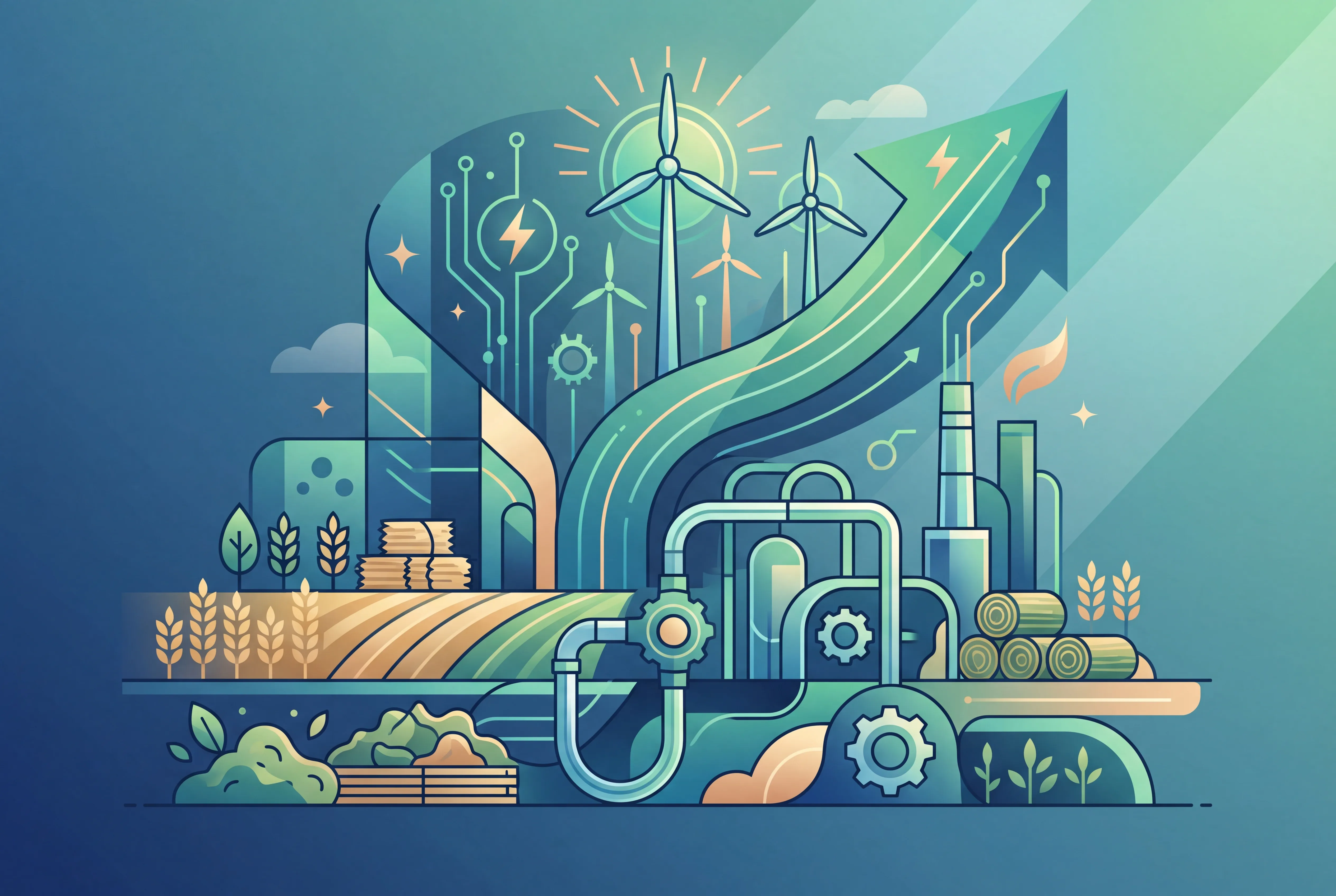
Aeonion Fuels Private Limited is a green technology startup based in Mansa, Punjab, dedicated to solving the critical issue of crop residue management. By developing a modular, farm-level reactor, the company converts rice straw into high-quality drop-in fuels. This decentralized approach targets the environmental crisis of stubble burning while providing farmers with a new, sustainable revenue stream, effectively shifting the agricultural economy toward a fuel-centric model.
The problem of agricultural waste is massive in India. During harvest seasons, millions of tons of rice straw are burned in fields to clear land for the next crop cycle. This practice is a major contributor to air pollution, particularly in Northern India. While large-scale bio-refineries have been proposed as solutions, they often fail due to the high logistics costs of transporting low-density biomass over long distances. Aeonion Fuels addresses this by moving the technology to the farm gate, eliminating the transport hurdle and creating a localized circular economy.
Market Analysis: Industry Trends and Target Audience
The target audience for Aeonion Fuels includes farmers, agricultural cooperatives, and local government bodies concerned with air quality and energy independence. Farmers are the primary stakeholders, as they stand to gain supplemental income from what was previously a "useless" byproduct. Additionally, the broader market includes industrial consumers seeking carbon-neutral energy sources to meet environmental, social, and governance (ESG) targets.
Three key industry trends support this business model: First, the global push for decarbonization is creating a surge in demand for second-generation (2G) biofuels. Second, government subsidies and environmental regulations are increasingly punishing the burning of crop residue, forcing a search for alternatives. Third, the rise of decentralized modular technology is making it possible to operate industrial-grade machinery in non-traditional settings, reducing the reliance on massive, centralized infrastructure.
Competitive Landscape: How Aeonion Fuels Private Limited Compares to Existing Alternatives
Traditional waste management in agriculture is dominated by large-scale centralized pelletization plants or government-funded bio-CNG facilities. These often struggle with the "logistics bottleneck," where the cost of collecting and moving straw outweighs the energy value of the resulting product. Aeonion Fuels differentiates itself by prioritizing decentralization and modularity.
Key Advantages of Aeonion Fuels Private Limited
- On-site Processing: By deploying reactors at the farm level, the company avoids the high logistics costs and carbon footprint associated with long-distance biomass transportation.
- Revenue Generation for Farmers: It transforms a disposal problem into a commodity, providing farmers with a direct financial incentive to stop burning residue.
- Modular Scalability: The reactor design is likely more flexible than massive plants, allowing for targeted deployment in the regions where stubble burning is most prevalent.
- Localized Economic Impact: It retains value within rural communities, supporting the development of local circular economies rather than sending profits to centralized urban refineries.
Limitations and Market Challenges
- Technical Complexity: Operating industrial-grade chemical reactors in field conditions presents significant maintenance and durability challenges.
- Capital Expenditure: While decentralized, deploying many small units still requires significant upfront investment in hardware and infrastructure.
- Regulatory Hurdles: Navigating fuel quality standards, environmental safety permits, and energy policy frameworks can be slow and bureaucratic for a startup.
- Adoption Rates: Changing entrenched farming practices takes time, and farmers may be skeptical of new technology without long-term government support or price guarantees.
AI Startup Validation Score & Assessment
- Problem Significance: 95/100 - Stubble burning is a severe ecological and public health emergency in India.
- Market Demand: 85/100 - There is immense pressure from governments and the private sector to find sustainable fuel sources.
- Innovation Level: 80/100 - Decentralized waste-to-energy is a strong conceptual pivot from traditional centralized approaches.
- Business Model Potential: 75/100 - Requires careful management of unit economics to ensure profitability at scale.
- Scalability Opportunity: 70/100 - Physical infrastructure rollouts are inherently slower than digital SaaS models, though the potential footprint is massive.
- Competitive Advantage: 65/100 - Success depends heavily on the proprietary nature of the reactor technology and operational efficiency.
- Long-Term Sustainability: 80/100 - The focus on green energy ensures alignment with long-term climate goals.
Overall Validation Score: 78.5/100
Strategic Lessons for Aspiring Entrepreneurs
First, solve the logistics bottleneck. In many industries, the cost of moving materials to a central point is the hidden factor that kills profitability. By taking the processing to the source, Aeonion Fuels creates a clear competitive edge. Second, align your business model with existing pain points that hold political or financial weight. By solving the stubble burning problem, they tap into government initiatives that incentivize clean tech solutions, easing the path toward adoption and funding.
Opportunities for Concept Improvement & Expansion
Aeonion Fuels could expand by integrating digital monitoring for real-time asset performance, allowing remote management of the modular units. Another pivot could involve diversifying the input material; if the reactors can handle other agricultural waste types, the utility increases significantly. Finally, establishing formal off-take agreements with local industrial energy consumers could provide the revenue stability required for rapid scaling.
Opportunities and Risks of Starting a Similar Business
Opportunities
The shift toward a green economy is creating a vacuum for efficient energy conversion technologies. New founders have the chance to innovate in waste-to-value sectors that were previously ignored by traditional players. There is a strong potential for government grants and ESG-focused venture capital.
Risks
The primary risks include high capital requirements and regulatory unpredictability. Startups in the hardware space also face longer development cycles compared to digital businesses, making cash flow management critical for survival during the R&D and pilot phases.
Frequently Asked Questions
FAQ 1: What is the main problem that Aeonion Fuels Private Limited addresses?
Aeonion Fuels addresses the environmental and economic crisis caused by the burning of agricultural crop residue, specifically rice straw, by converting it into usable green fuel.
FAQ 2: Who are the primary target customers for this type of business?
The primary customers are farmers who generate waste, and industrial entities looking for sustainable energy solutions to meet ESG goals.
FAQ 3: What is the typical revenue model for a startup like Aeonion Fuels Private Limited?
Revenue typically comes from the sale of the produced biofuel, service fees for processing waste, and potentially carbon credits generated by diverting waste from burning.
FAQ 4: How can someone validate a similar startup idea?
Validating a hardware-intensive startup requires deep analysis of unit economics and regulatory feasibility. Before investing heavily, you should use tools like ideation.biz to evaluate market demand, identify potential competitive risks, and build a clearer path for your product development.
FAQ 5: What factors should be analyzed before launching a new venture?
You must analyze the total addressable market, operational logistics, potential regulatory hurdles, and competitor landscape. Platforms like ideation.biz help founders quickly generate SWOT insights and market viability scores to ensure they are building something with real demand.
FAQ 6: How can founders identify hidden risks in their business concept?
Risk identification involves looking beyond the surface of your business plan to assess supply chain volatility, market saturation, and technological debt. Using ideation.biz allows you to run comprehensive simulations and stress-test your assumptions against data-driven insights.
Conclusion
Aeonion Fuels represents a promising synthesis of technology and environmental stewardship. By addressing the logistical hurdles of the green fuel industry, they have positioned themselves to make a tangible impact on agricultural waste. For those inspired to tackle similar systemic problems, thorough validation is the first step toward success.
Before you invest your time or capital in a new venture, ensure you have the data to back your vision. Head over to ideation.biz to validate your business idea with professional market insights and strategic analysis, just like the founders behind the most successful green tech startups.
Validate Your Startup Idea Before You Invest Time & Money
Get instant market insights, competitive analysis, and strategic recommendations for your next venture.
Related Blogs
More insights on validation and entrepreneurship.