AISMART BIN: Analyzing the Future of AI-Driven Waste Management
Explore how AISMART BIN uses AI and IoT to revolutionize waste management, its business model, and strategic lessons for entrepreneurs in the green tech sector.
Introduction: Who is AISMART BIN PRIVATE LIMITED and What Problem Do They Solve?
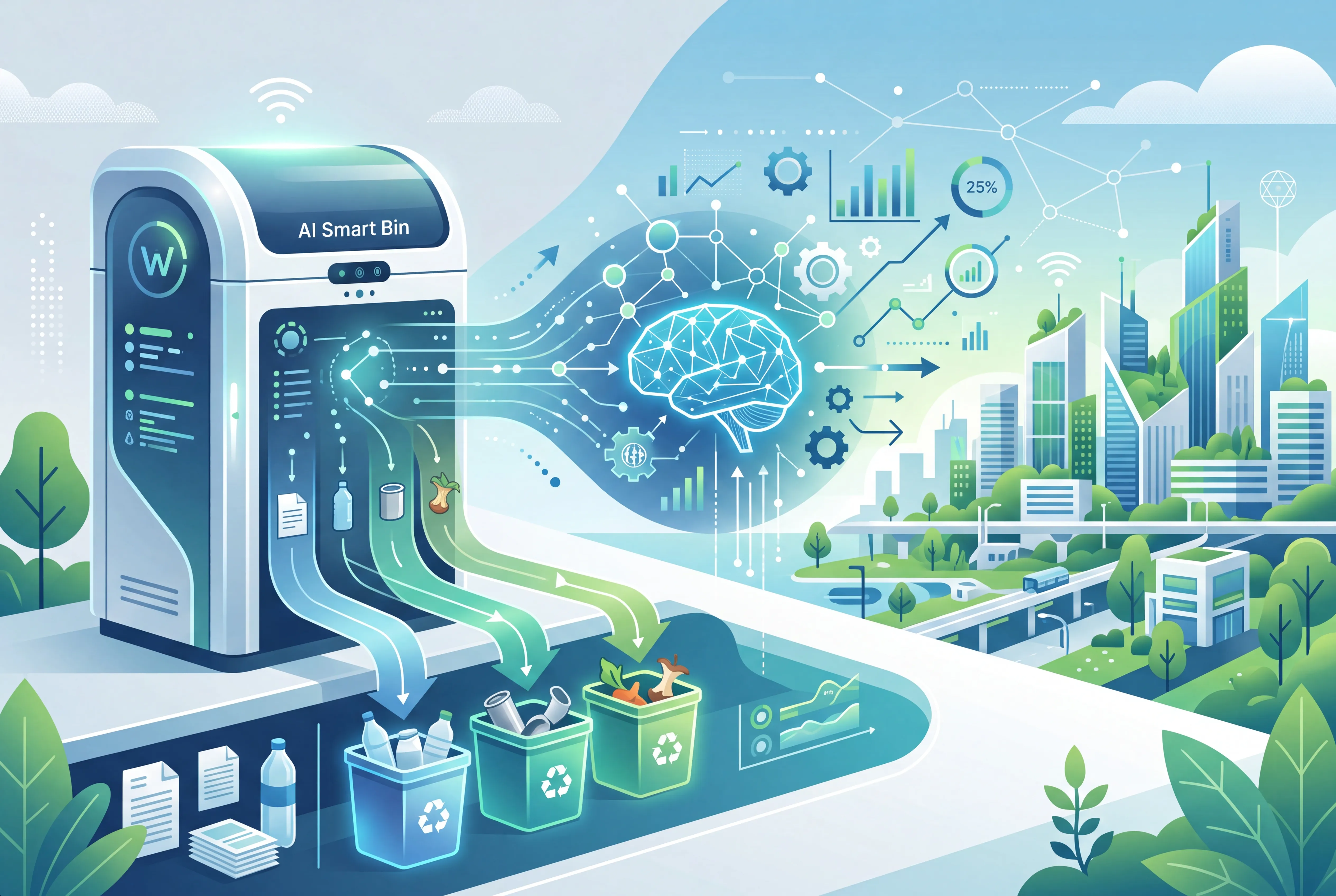
AISMART BIN PRIVATE LIMITED is a Bengaluru-based green technology startup that integrates AI and IoT to automate waste sorting, compression, and collection monitoring. By serving municipalities, businesses, and communities, they tackle the critical problem of inefficient urban waste management, high operational costs, and low recycling rates, aiming to transition cities toward a circular economy model.
Waste management remains one of the most persistent hurdles for urban planners worldwide. Traditional methods rely on scheduled collection routes, which are often inefficient, leading to overflowing bins in some areas and underutilized capacity in others. AISMART BIN addresses this by providing real-time data insights that allow for dynamic routing and optimized handling, significantly reducing the environmental footprint of waste logistics. By turning a routine public service into a data-driven process, the company seeks to lower labor and fuel costs while simultaneously increasing the purity of recyclable materials collected.
The relevance of this startup stems from the growing global pressure to meet sustainability targets and manage rapid urban growth. As waste volumes increase, cities can no longer afford the inefficiencies of legacy collection systems. AISMART BIN represents a shift toward intelligent infrastructure where hardware, such as smart bins, acts as a sensing node for city-wide logistics, effectively moving waste management from a manual chore to an automated industrial process.
Market Analysis: Industry Trends and Target Audience
The market for waste management is undergoing a significant transition from reactive manual collection to proactive, data-informed operations. The global green technology sector is expanding as governments and private companies face stricter environmental regulations, such as landfill diversion mandates and carbon reduction targets.
Key Industry Trends
-
Integration of IoT in Smart Cities: Municipalities are increasingly adopting IoT sensors to transform street infrastructure into "smart" assets. This allows for real-time monitoring of various urban services, including waste bins, streetlights, and traffic management.
-
The Circular Economy Mandate: There is a growing emphasis on recovering materials rather than disposing of them. Technologies that can sort waste at the source significantly increase the value of recyclables, making the process economically viable for private operators.
-
Labor and Operational Efficiency: With rising labor costs and fuel volatility, logistics companies are seeking ways to reduce the mileage of collection vehicles. Smart routing, powered by data from sensors, has become a standard requirement for efficient city operations.
Target Audience
- Municipal Corporations: Large-scale urban bodies responsible for city-wide waste management who need to reduce costs and meet environmental quotas.
- Large Commercial Hubs: Corporate campuses, malls, and tech parks that generate high volumes of waste and must report on their sustainability performance.
- Community Housing Societies: Residential clusters seeking to reduce disposal fees and automate their local waste management systems.
Competitive Landscape: How AISMART BIN PRIVATE LIMITED Compares to Existing Alternatives
While traditional waste management is handled by manual collection contractors, AISMART BIN competes with other smart-bin providers, automated sorting machinery manufacturers, and logistics optimization software companies. The competitive landscape is divided between hardware-heavy incumbents and software-focused startups.
Key Advantages of AISMART BIN PRIVATE LIMITED
- Data-Driven Decision Making: By using sensors, AISMART BIN provides actionable intelligence rather than just collection schedules, allowing for dynamic route planning that saves significant fuel and labor.
- Source-Level Efficiency: Their ability to compress waste at the point of origin minimizes the number of collection trips required, directly impacting the bottom line of the operator.
- Scalability: The system is designed to integrate into existing urban frameworks, making it a modular solution for different types of clients, from individual businesses to entire city blocks.
Limitations and Market Challenges
- High Initial Capital Expenditure: Smart hardware implementations often require significant upfront investment, which can be a barrier for municipal government adoption, which often operates on restricted annual budgets.
- Connectivity Dependence: The reliance on stable IoT networks can be a bottleneck in areas with poor cellular or network infrastructure, potentially limiting deployment in certain parts of cities.
- Maintenance Complexity: Managing a fleet of smart devices requires a dedicated technical maintenance team, unlike traditional static bins, which are low-maintenance.
AI Startup Validation Score & Assessment
- Problem Significance: 90/100 - Waste management is a fundamental, high-cost, and environmentally critical issue for every city, providing a clear need for optimization.
- Market Demand: 85/100 - Sustainability-driven technologies have strong support from investors and government sustainability initiatives globally.
- Innovation Level: 75/100 - While smart waste sensors exist, combining sorting, compression, and analytics provides a comprehensive, differentiated value proposition.
- Business Model Potential: 80/100 - The B2B and B2G (business-to-government) models offer reliable revenue streams, particularly through recurring software-as-a-service (SaaS) fees for data management.
- Scalability Opportunity: 70/100 - Expansion is physically intensive due to the requirement for hardware installation, which is harder to scale than pure software products.
- Competitive Advantage: 65/100 - Technology can be replicated; however, strong partnerships and operational data provide a defensible moat over time.
- Long-Term Sustainability: 85/100 - As circular economy regulations tighten, the demand for this type of system will likely grow consistently over the next decade.
Overall Validation Score: 78.5/100
Strategic Lessons for Aspiring Entrepreneurs
- Focus on Solving Tangible Economic Pain: AISMART BIN succeeds because it solves a cost problem (fuel and labor) alongside an environmental one. Founders should always link their sustainability claims to direct financial savings for the client.
- Leverage Data as a Product: The hardware is the entry point, but the real value lies in the data insights generated. Aspiring entrepreneurs should consider how their physical product can generate ongoing, valuable data that justifies recurring revenue models.
- Understand the Procurement Cycle: B2G and B2B sales often involve long, complex procurement cycles. Building trust through pilot programs is essential before attempting a full-scale deployment.
Opportunities for Concept Improvement & Expansion
- AI-Driven Predictive Analytics: Beyond current fill levels, the system could predict waste generation patterns based on weather, local events, and seasonal trends to optimize fleet schedules even further.
- Gamification for Recycling: Integrating user-facing apps that allow individuals to track their personal contribution to sustainability could improve sorting accuracy at the source.
- Hardware-as-a-Service Model: Instead of selling the bins, offering them as a service with a monthly fee could lower the entry barrier for smaller municipalities and businesses.
Opportunities and Risks of Starting a Similar Business
Opportunities
- Public-Private Partnerships (PPP): There is massive potential for startups to partner with cities to upgrade aging infrastructure, often supported by central or state government grants.
- Integration with Smart City Ecosystems: New ventures can position themselves as a core data provider for city-wide "smart city" platforms, increasing their strategic importance.
Risks
- Regulatory Hurdles: Waste management is highly regulated. Startups must navigate strict local laws, safety standards, and union labor dynamics.
- Hardware Lifecycle Risk: If the technology becomes obsolete or requires frequent repairs, the operational costs can quickly outweigh the savings generated for the client.
Frequently Asked Questions
FAQ 1: What is the main problem that AISMART BIN PRIVATE LIMITED addresses?
AISMART BIN solves the issue of inefficient waste collection in urban environments. Traditional methods are manual and rely on fixed routes, causing high fuel usage and overflowing bins. AISMART BIN uses AI and IoT to optimize collection, sort waste, and compress it, leading to lower costs and higher recycling rates.
FAQ 2: Who are the primary target customers for this type of business?
The primary customers include municipal corporations managing public waste, corporate campuses and commercial hubs that need to meet green reporting standards, and large-scale residential societies looking to automate and optimize their local waste processing operations.
FAQ 3: What is the typical revenue model for a startup like AISMART BIN PRIVATE LIMITED?
Typically, these companies utilize a hybrid revenue model. They earn through hardware sales or leasing for the smart bins, supplemented by ongoing subscription fees for the AI-driven data analytics and management software, which provides the insights for optimized routing and collection.
FAQ 4: How can someone validate a similar startup idea?
Validating a green tech idea requires assessing market readiness, local regulations, and the willingness of stakeholders to invest in new infrastructure. Before building, you should test the market demand and competition. Tools like ideation.biz provide a structured validation process, helping you analyze market viability, risks, and USP clarity, saving you months of trial and error.
FAQ 5: What factors should be analyzed before launching a new venture?
You must analyze market size, target demographics, competitive landscape, and regulatory barriers. It is also crucial to define a clear revenue model that creates value for your customer. Using a service like ideation.biz can help you perform an instant SWOT analysis and competitor breakdown, ensuring you are building something that the market actually wants.
FAQ 6: How can founders identify hidden risks in their business concept?
Identifying risks involves evaluating technical feasibility, long-term maintenance costs, and market acceptance. Many founders overlook operational bottlenecks until they scale. By using platforms like ideation.biz, entrepreneurs can get a professional "Quick Check" or "Founder Mode" report that highlights hidden pitfalls and suggests mitigation strategies based on real data.
Conclusion
AISMART BIN PRIVATE LIMITED is a compelling example of how traditional sectors can be modernized through the application of smart technologies. Their focus on tangible financial and operational efficiency positions them well within the growing green tech landscape. As cities continue to urbanize, the demand for such intelligent, data-led systems will only increase, creating a significant opportunity for innovation in the waste management sector.
Are you looking to validate your own startup idea before you invest your time and capital? Don't leave your success to chance. Visit ideation.biz to run a comprehensive validation report on your business concept and get the clarity you need to launch with confidence.
Validate Your Startup Idea Before You Invest Time & Money
Get instant market insights, competitive analysis, and strategic recommendations for your next venture.
Related Blogs
More insights on validation and entrepreneurship.