ACIC-KIF Nutri-Veg Rooftop LLP: Evaluating Sustainable Urban Agriculture
Explore the business model of ACIC-KIF Nutri-Veg Rooftop LLP, its market impact, challenges in urban agriculture, and strategic lessons for new founders.
Introduction: Who is ACIC-KIF Nutri-Veg Rooftop LLP and What Problem Do They Solve?
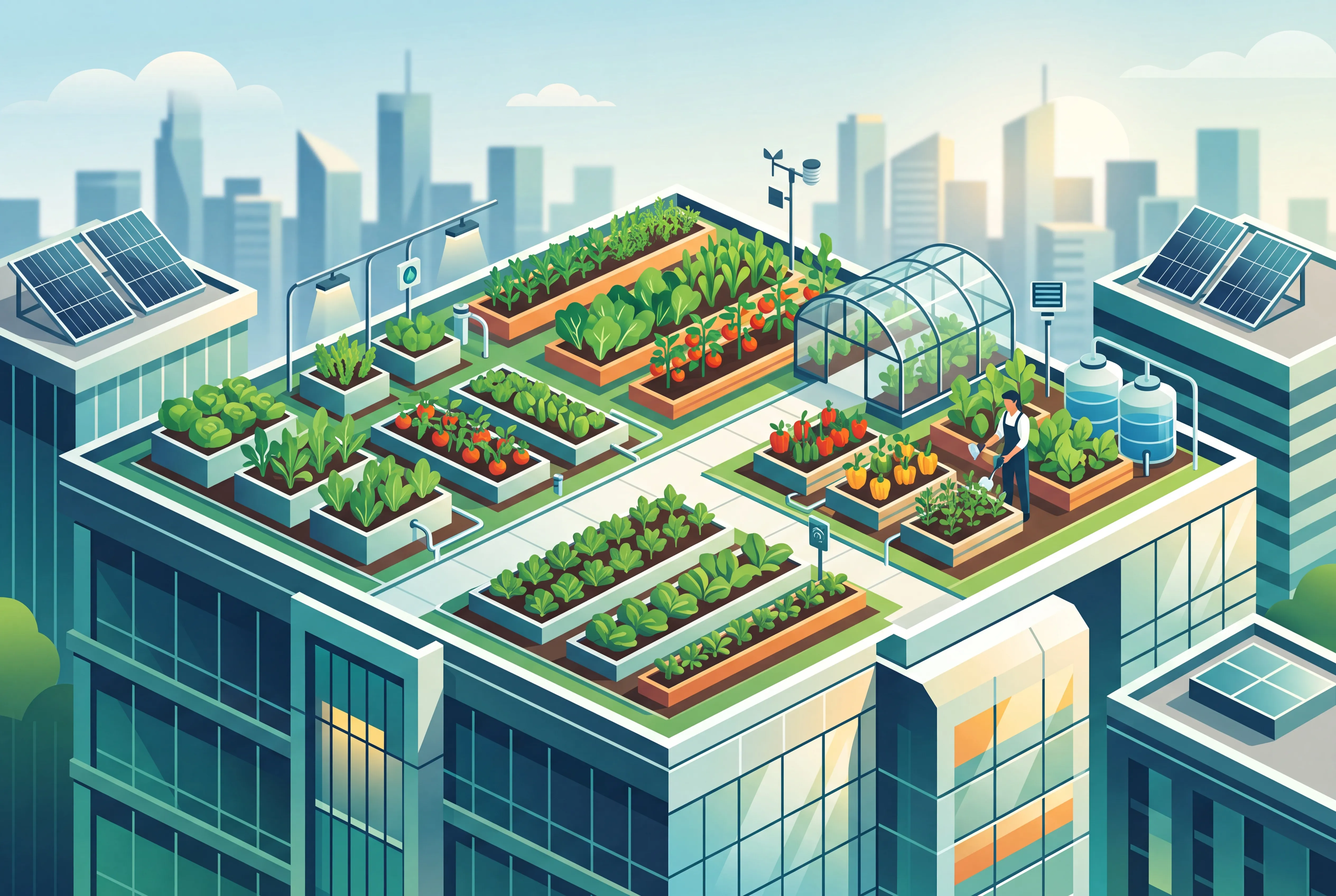
ACIC-KIF Nutri-Veg Rooftop LLP is an innovative venture based in Virudhunagar, Tamil Nadu, focused on the development of rooftop greenhouses to facilitate sustainable vegetable production and advanced nutrient management. The startup addresses the critical problem of urban food insecurity and the supply chain inefficiencies inherent in traditional produce distribution. By converting underutilized urban rooftops into productive agricultural spaces, they aim to shorten the distance between farms and dining tables, providing fresh, nutrient-dense organic vegetables to local consumers while minimizing the environmental footprint associated with conventional food transport.
In the context of modern urban development, traditional agriculture is increasingly pressured by urbanization, shrinking fertile land, and volatile supply chains. ACIC-KIF Nutri-Veg Rooftop LLP recognizes that the future of resilient food systems lies in decentralization. Their approach leverages vertical space and enclosed cultivation methods to create a controlled environment where produce can be grown year-round, regardless of local seasonal limitations or external market fluctuations. This model is not just about growing food; it is about re-engineering the urban landscape to serve as a primary source of sustenance, thereby empowering local communities and reducing reliance on centralized, chemical-intensive agricultural networks.
Market Analysis: Industry Trends and Target Audience
The target audience for ACIC-KIF Nutri-Veg Rooftop LLP comprises urban residents, health-conscious consumers, local restaurants, and community institutions in the Tamil Nadu region that prioritize organic, locally sourced produce. As urbanization intensifies, these groups are increasingly frustrated by the lack of transparency in food origin and the use of harmful pesticides in commercial farming. Consequently, there is a rising demand for hyper-local food solutions that guarantee quality and nutritional integrity.
Three key industry trends support this business concept. First, the rapid adoption of Controlled Environment Agriculture (CEA), which includes greenhouses and hydroponic systems, allows for higher yield efficiency with significantly lower water usage—a critical factor in India's arid or water-stressed regions. Second, the "farm-to-table" movement continues to transition from a niche trend to a mainstream consumer expectation, particularly in urban centers where premium pricing for quality vegetables is accepted. Third, government initiatives focused on sustainable urban planning and entrepreneurship in agriculture are creating favorable regulatory environments for ventures that integrate green technology with urban infrastructure.
Competitive Landscape: How ACIC-KIF Nutri-Veg Rooftop LLP Compares to Existing Alternatives
ACIC-KIF Nutri-Veg Rooftop LLP faces competition from traditional vegetable vendors, supermarket chains, and rising hydroponic farming startups. While traditional vendors offer low prices, they struggle with quality consistency and pesticide concerns. Large retailers offer convenience but often rely on long, carbon-intensive supply chains. Compared to these, ACIC-KIF occupies a middle ground that balances quality with local accessibility.
Key Advantages of ACIC-KIF Nutri-Veg Rooftop LLP
- Hyper-local Supply Chain: By growing on rooftops, the startup eliminates the "last mile" logistics costs and delivery time, ensuring maximum freshness.
- Nutrient Management Specialization: Unlike general farming, their focus on nutrient management suggests a higher quality, scientifically monitored product, appealing to the health-conscious segment.
- Land Utilization Efficiency: In dense urban environments, the ability to utilize vertical space rather than competing for precious ground real estate is a significant logistical and financial edge.
Limitations and Market Challenges
- Initial Capital Expenditure (CapEx): Greenhouse technology, even on a small scale, requires substantial upfront investment in equipment, structural reinforcement, and automation, which can strain cash flow during the early growth phases.
- Operational Complexity: Managing a rooftop greenhouse requires technical expertise in climate control, plant pathology, and hydroponic nutrient solutions, making the hiring and retention of skilled staff a constant challenge.
- Scalability Bottlenecks: Unlike traditional open-field farms, rooftop setups are limited by the physical capacity of the building's infrastructure, which may restrict large-scale production volume without geographic expansion.
AI Startup Validation Score & Assessment
- Problem Significance: 85/100 - Urban food resilience and pesticide-free produce are top-tier concerns for modern Indian urbanites.
- Market Demand: 78/100 - Growing middle-class interest in organic food supports consistent demand, though price sensitivity remains a factor.
- Innovation Level: 70/100 - While rooftop greenhouses are not new, the specific regional application and focus on nutrient management provide a decent competitive angle.
- Business Model Potential: 65/100 - Selling produce directly has lower margins than high-tech ag-tech models, yet it is more stable and predictable.
- Scalability Opportunity: 60/100 - Rooftop farming is inherently limited by building capacity, making geographic "multi-site" scaling more complex than software.
- Competitive Advantage: 68/100 - Local brand equity and freshness serve as strong moats against distant, generic supply chains.
- Long-Term Sustainability: 75/100 - As climate change affects traditional farming, localized, climate-resilient production becomes increasingly essential.
Overall Validation Score: 71.6/100
Strategic Lessons for Aspiring Entrepreneurs
-
Solve a Hyper-Local Pain Point: ACIC-KIF Nutri-Veg Rooftop LLP teaches that you don't need to invent a global technology to build a successful startup. Simply taking a known technology (greenhouses) and applying it to a specific local inefficiency (food miles in cities) can create a viable and necessary business.
-
Prioritize Operational Excellence: In agricultural startups, product quality is the brand. By focusing on nutrient management, the company builds trust with the consumer that is difficult for competitors to replicate. Founders should identify the one aspect of their service that delivers the highest perceived value and double down on it.
-
Think Beyond Initial Funding: The startup demonstrates that high-barrier-to-entry industries like ag-tech require a realistic understanding of infrastructure costs. Entrepreneurs must build a financial model that accounts for the "maintenance" phase of hardware-heavy businesses, not just the initial launch.
Opportunities for Concept Improvement & Expansion
-
Subscription-Based Revenue: To stabilize cash flow, the company could introduce a weekly "harvest subscription box" for local residents, moving away from relying on daily spot market sales to a recurring revenue model.
-
B2B Partnerships: Partnering with luxury hotels, high-end organic kitchens, or wellness centers in Tamil Nadu could allow for higher price points and bulk orders, improving margins and streamlining distribution.
-
Agri-Tourism and Education: Utilizing the rooftop space as an educational hub or workshop center for urban gardening could create an additional, high-margin revenue stream while simultaneously building community brand authority.
Opportunities and Risks of Starting a Similar Business
Opportunities
New founders in this space can leverage the increasing availability of affordable, modular hydroponic and aeroponic kits to reduce entry costs. There is also a massive opportunity to integrate smart sensors and IoT (Internet of Things) to monitor plant health remotely, enabling one operator to manage multiple smaller rooftop locations efficiently.
Risks
Entry barriers include structural engineering safety regulations, water access, and the high maintenance requirements of equipment in humid or hot urban climates. Additionally, the risk of extreme weather events causing sudden crop loss is a constant threat that requires robust insurance and contingency planning.
Frequently Asked Questions
FAQ 1: What is the main problem that ACIC-KIF Nutri-Veg Rooftop LLP addresses?
The startup tackles urban food insecurity and the lack of fresh, organic produce in cities by utilizing rooftop spaces for controlled, sustainable greenhouse agriculture, shortening supply chains.
FAQ 2: Who are the primary target customers for this type of business?
The primary audience includes urban households, health-conscious consumers, local organic food retailers, and high-end restaurants seeking farm-fresh, pesticide-free produce.
FAQ 3: What is the typical revenue model for a startup like ACIC-KIF Nutri-Veg Rooftop LLP?
The model typically relies on the direct sale of produce to consumers or local businesses, with potential to scale into subscription-based "fresh boxes" or B2B contracts.
FAQ 4: How can someone validate a similar startup idea?
Validating a similar concept requires assessing local demand, infrastructure feasibility, and cost-benefit analysis of production. Tools like ideation.biz can provide critical market research and SWOT insights to help you determine if your specific location has the market depth required for a sustainable urban farming business.
FAQ 5: What factors should be analyzed before launching a new venture?
You should analyze market size, potential competition, unit economics, and operational risks. Using a platform like ideation.biz allows you to input your idea and receive an AI-generated analysis of your business strategy, helping you identify hidden pitfalls before you commit your first dollar.
FAQ 6: How can founders identify hidden risks in their business concept?
Identifying risks involves looking at supply chain volatility, technology failures, and regulatory hurdles. Utilizing an expert-led tool like ideation.biz can help you simulate scenarios, compare your model to existing competitors, and generate a comprehensive risk assessment, ensuring you aren't blind-sided by challenges commonly faced in the ag-tech space.
Conclusion
ACIC-KIF Nutri-Veg Rooftop LLP represents a vital shift toward more resilient and localized food systems. By merging the technical requirements of nutrient management with the logistical advantages of urban rooftop space, the startup offers a clear path toward sustainable city living. However, success depends on meticulous financial planning and operational consistency, which are common hurdles for any hardware-intensive agricultural venture.
If you are inspired by this model and considering starting a similar urban-agriculture or sustainable-food business, don't leave your success to chance. Use the ideation.biz platform today to test your startup idea, analyze your market potential, and gain the strategic clarity you need to launch with confidence.
Validate Your Startup Idea Before You Invest Time & Money
Get instant market insights, competitive analysis, and strategic recommendations for your next venture.
Related Blogs
More insights on validation and entrepreneurship.