Airbuddy Aerospace: Accelerating Electric Motor Manufacturing for Modern Aviation
Discover how Airbuddy Aerospace is disrupting electric motor manufacturing with speed and precision, and learn valuable lessons for your own startup journey.
Introduction: Who is Airbuddy Aerospace and What Problem Do They Solve?
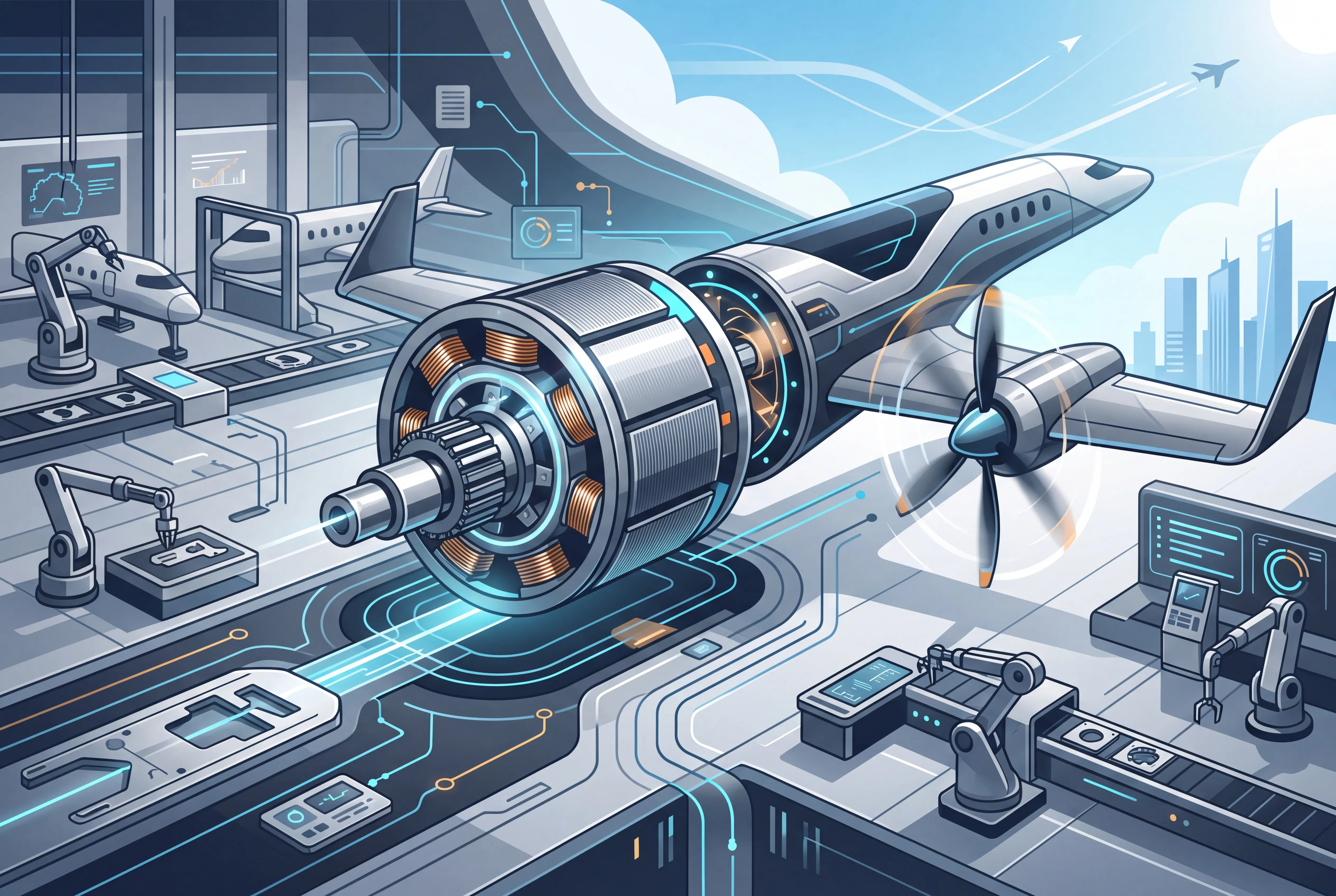
Airbuddy Aerospace Private Limited is a specialized aeronautics startup based in Purbi Champaran, Bihar, that aims to transform electric motor technology for the aerospace and defense sectors. By employing proprietary printed winding techniques and advanced algorithms, the company enables the manufacturing of custom-made motors in as little as seven days, effectively bypassing traditional R&D delays and high initial development costs for aerospace clients.
The aerospace industry has long been stifled by lengthy procurement cycles and expensive, bespoke motor design processes. For startups and defense contractors alike, the time and capital required to prototype and validate a new motor can reach millions, stalling progress in the shift toward electric aviation. Airbuddy Aerospace addresses this by digitizing the manufacturing workflow, allowing for rapid iterations and a streamlined path from design to a TRL-9 (Technology Readiness Level 9) product.
Market Analysis: Industry Trends and Target Audience
The target audience for Airbuddy Aerospace consists primarily of Unmanned Aerial Vehicle (UAV) manufacturers, drone developers, and defense contractors who require high-performance, custom electric propulsion systems. These entities operate in a high-stakes environment where precision and reliability are non-negotiable, but the speed of development often dictates market survival.
Three key industry trends support this business concept:
- The rapid electrification of aviation: From delivery drones to air taxis, the demand for lightweight, efficient, and custom-tuned motors is surging.
- Supply Chain Decentralization: Defense and aviation sectors are moving toward domestic manufacturing capabilities, making local players like Airbuddy strategically valuable.
- The Shift to Digital Manufacturing: Moving away from manual winding and traditional prototyping allows companies to reduce waste and optimize motor performance through algorithmic precision.
Competitive Landscape: How Airbuddy Aerospace Compares to Existing Alternatives
Traditional electric motor manufacturers typically operate on legacy manufacturing timelines, where R&D can last months, and production cycles are hindered by manual assembly constraints. Established players often charge significant "non-recurring engineering" (NRE) fees, which serve as a major barrier for smaller aerospace entrants. Airbuddy Aerospace offers a more agile, software-first approach that disrupts these high barriers to entry.
Key Advantages of Airbuddy Aerospace
- Unprecedented Speed: The 7-day delivery window for custom motors is a significant differentiator compared to industry averages of several months.
- Cost Efficiency: By eliminating traditional R&D overhead, they save clients up to 20 lakhs in initial costs, democratizing access to high-end engineering.
- Algorithmic Precision: The use of proprietary printed winding techniques allows for motors that are potentially more compact and efficient than traditional hand-wound counterparts.
- Validated Reliability: Achieving TRL-9 status means the technology is proven and ready for operational deployment, which provides crucial trust for defense and aviation OEMs.
Limitations and Market Challenges
- Stringent Aerospace Certification: Operating in aerospace requires adherence to rigorous safety standards (such as DO-160 for avionics). Meeting these for every custom variation can be a long-term hurdle.
- Scalability of Customization: Maintaining a 7-day turnaround while scaling from individual prototypes to mass production requires highly sophisticated, automated machinery.
- Intellectual Property Protection: In the defense sector, maintaining the security of proprietary algorithms while dealing with multiple OEMs requires robust legal and cybersecurity infrastructure.
AI Startup Validation Score & Assessment
- Problem Significance: 90/100 - The high cost and slow speed of aerospace hardware development are primary blockers for the electric aviation sector.
- Market Demand: 85/100 - The growing drone and defense market requires exactly the kind of agile hardware support Airbuddy provides.
- Innovation Level: 80/100 - Utilizing printed winding and algorithms for motor manufacturing is a sophisticated, modern approach to an old industry.
- Business Model Potential: 75/100 - The lean, service-oriented manufacturing model is scalable, though it remains capital-intensive to maintain precision hardware.
- Scalability Opportunity: 70/100 - As a hardware-focused company, scaling requires significant investment in automated production lines, but the software core allows for rapid scaling of designs.
- Competitive Advantage: 75/100 - Their ability to deliver in 7 days without massive R&D costs is a clear moat against slow-moving, traditional incumbents.
- Long-Term Sustainability: 80/100 - The focus on electrification in aviation is a long-term tailwind, ensuring sustained demand for efficient propulsion.
Overall Validation Score: 79/100
Strategic Lessons for Aspiring Entrepreneurs
- Focus on Painful Bottlenecks: Airbuddy succeeded by identifying a specific, high-cost bottleneck (R&D and manufacturing time) and solving it with technology. Founders should look for "time-sinks" in their target industries.
- Validate via Strategic Partnerships: Securing LOIs (Letters of Intent) and partnerships early, as Airbuddy did with OEMs, is essential for hardware startups to prove market interest before full-scale production.
- Leverage Regional Advantages: Being incubated at a prestige institution like IIT Patna provides access to talent and funding that can significantly de-risk early-stage R&D.
Opportunities for Concept Improvement & Expansion
- Digital Twin Integration: Providing customers with a digital twin of their motor design could allow them to run simulations before the physical production, further enhancing trust.
- Modular Motor Components: Developing a catalog of "standard" custom components that can be quickly assembled could further reduce the delivery time below 7 days.
- Defense-Specific Compliance Focus: Doubling down on achieving specific defense manufacturing certifications could open up higher-margin government contracts.
Opportunities and Risks of Starting a Similar Business
Opportunities
- Tapping into the local manufacturing incentive programs for aerospace components.
- Creating a platform that bridges the gap between digital design software (CAD) and automated manufacturing.
- Offering end-to-end propulsion system consulting rather than just individual motor sales.
Risks
- High capital expenditure requirements for precision manufacturing equipment.
- Rapid technological shifts in battery and motor chemistry could render current designs obsolete.
- Dependence on a small number of OEMs can create significant revenue volatility.
Frequently Asked Questions
FAQ 1: What is the main problem that Airbuddy Aerospace addresses?
Airbuddy Aerospace solves the excessive time and financial costs associated with prototyping custom-made electric motors for the aerospace and defense sectors, allowing faster time-to-market.
FAQ 2: Who are the primary target customers for this type of business?
Primary customers include UAV manufacturers, electric aircraft developers, defense contractors, and research institutions that require rapid, high-performance propulsion solutions.
FAQ 3: What is the typical revenue model for a startup like Airbuddy Aerospace?
Most startups in this space use a B2B model involving custom engineering service fees, upfront prototype development costs, and volume-based manufacturing contracts for production runs.
FAQ 4: How can someone validate a similar startup idea?
Validating a hardware-focused idea requires verifying demand from potential OEMs and quantifying the time/cost savings your solution provides. Tools like ideation.biz can help you analyze if your proposed hardware efficiency is truly a market necessity and identify potential competitive gaps early on.
FAQ 5: What factors should be analyzed before launching a new venture?
Key factors include market size, the intensity of competitor moats, supply chain dependencies, and the regulatory environment. Using the ideation.biz platform can assist in conducting a comprehensive SWOT analysis, helping you determine if your venture is viable before you invest your first dollar.
FAQ 6: How can founders identify hidden risks in their business concept?
Founders often ignore supply chain volatility and certification hurdles. A deep validation process—like that offered by ideation.biz—can highlight these overlooked variables, giving you a clearer roadmap of the risks you need to mitigate before full-scale development.
Conclusion
Airbuddy Aerospace represents a growing trend of high-tech startups focusing on hardware acceleration. By marrying traditional engineering with modern algorithmic manufacturing, they have created a defensible and highly valued service. For entrepreneurs looking to disrupt industrial sectors, the path forward involves focusing on speed, precision, and strategic partnerships. If you are sitting on an idea and want to ensure it has the same level of market validation, consider running your concept through our AI-driven assessment tool at ideation.biz to gain the clarity you need to launch with confidence.
Validate Your Startup Idea Before You Invest Time & Money
Get instant market insights, competitive analysis, and strategic recommendations for your next venture.
Related Blogs
More insights on validation and entrepreneurship.