Agrowvitz Innovations: Transforming Urban Agriculture with AI-Driven Hydroponics
Explore the business model of Agrowvitz Innovations, an Agri-tech startup in Bengaluru. Learn about urban hydroponics, scalability, and how to validate similar ideas.
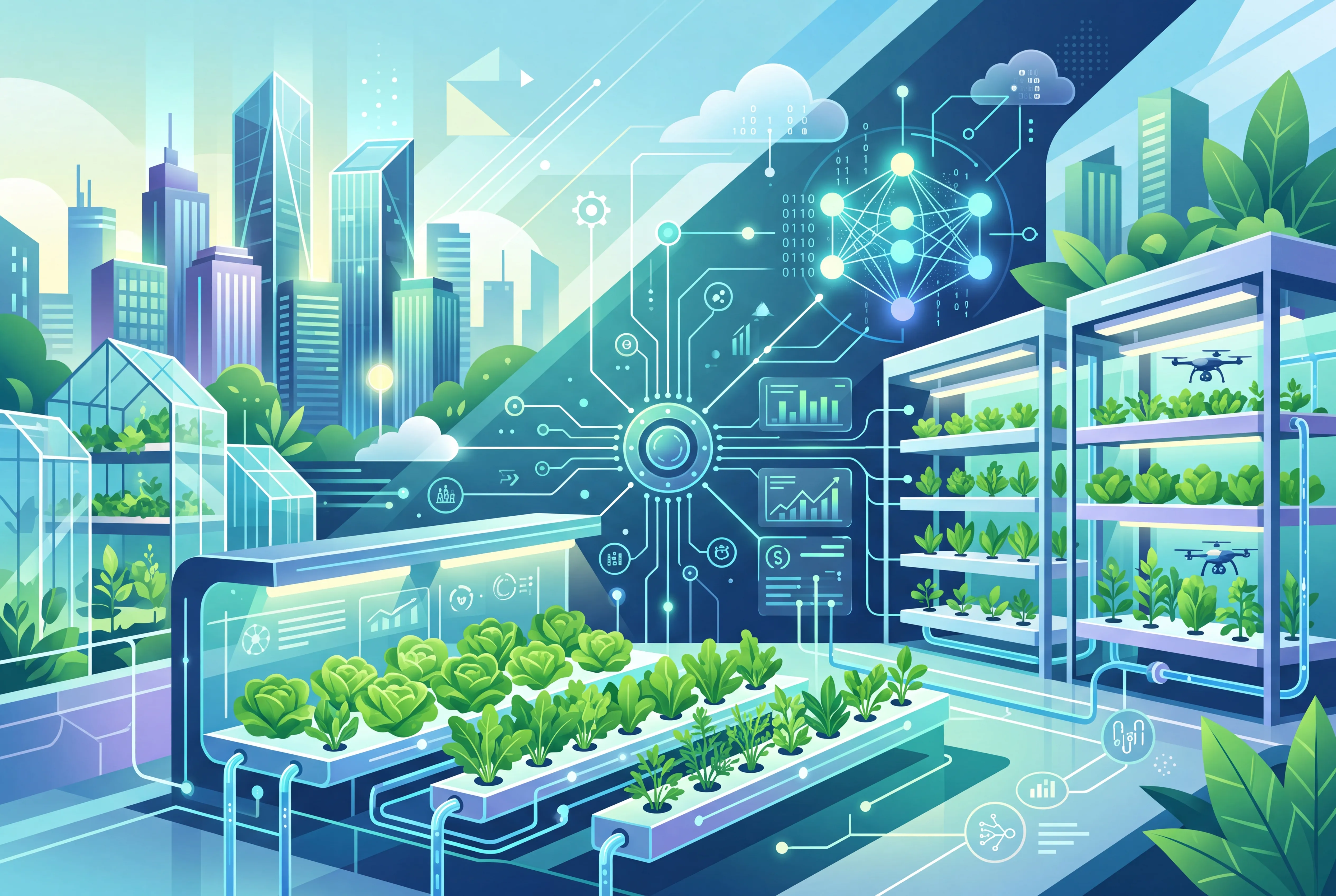
Introduction: Who is Agrowvitz Innovations Private Limited and What Problem Do They Solve?
Agrowvitz Innovations Private Limited is an Agri-Tech startup based in Bengaluru, India, that provides modular, AI-assisted hydroponic farming solutions. The company serves urban residents, educational institutions, and commercial growers by enabling pesticide-free, space-efficient, and water-conserving food production. By addressing land scarcity and the need for high-quality, traceable produce, Agrowvitz allows for year-round harvesting in environments where traditional soil-based farming is impossible.
The global shift toward urbanization has led to significant challenges in food security and supply chain reliability. Consumers are increasingly wary of pesticide-laden produce and the carbon footprint associated with long-distance food transport. Agrowvitz Innovations taps into this demand by localizing production. Through its HapphyGreenz brand, the startup deploys vertical hydroponic towers that require minimal space while maximizing output. This model is particularly critical for Indian metropolitan areas like Bengaluru, where housing density makes traditional gardening unfeasible for the average household.
Market Analysis: Industry Trends and Target Audience
The target audience for Agrowvitz Innovations is multifaceted, ranging from eco-conscious urban professionals and home-schooling families to institutional cafeterias and commercial B2B clients seeking consistent, premium produce supply. Each segment faces specific pain points: urban residents lack space; institutions face high costs for quality greens; and commercial growers struggle with inconsistent crop quality caused by climate fluctuations.
Several industry trends support this business model. First, there is a growing consumer preference for 'farm-to-table' transparency. People want to know where their food comes from and how it is grown. Second, the rising cost of water and the increasing volatility of seasonal agriculture are pushing businesses toward controlled-environment agriculture (CEA). Finally, the adoption of IoT and AI in farming—often called Precision Agriculture—is lowering the barrier to entry for non-farmers, allowing systems like the Neo X tower to manage pH levels, light cycles, and nutrient delivery automatically.
Competitive Landscape: How Agrowvitz Innovations Compares to Existing Alternatives
Agrowvitz Innovations competes against traditional soil-based landscaping services, home gardening equipment providers, and other nascent hydroponic startups. While traditional gardening is cheaper in terms of upfront hardware, it is labor-intensive and lacks the consistent yields of high-tech hydroponic systems.
Key Advantages of Agrowvitz Innovations
- Modular Design: The Neo X system is designed to scale, making it suitable for both small balconies and large-scale commercial rooftops.
- AI-Driven Management: By automating complex nutrient and light variables, Agrowvitz removes the 'learning curve' barrier that typically causes home growers to quit.
- Revenue Diversification: Beyond hardware sales, the startup captures value through recurring maintenance services and education, which builds long-term customer loyalty.
- Sustainability Focus: Significant reductions in water usage compared to conventional soil farming directly address India's growing water scarcity issues.
Limitations and Market Challenges
- High Initial Investment: The upfront cost of automated hydroponic towers can be a barrier compared to basic pots and soil.
- Maintenance Dependency: Clients who are not 'tech-savvy' may feel dependent on the startup for upkeep or repairs.
- Power Reliability: While systems are automated, they require a constant power supply for pumps and LED lights, which can be challenging in regions with frequent power outages.
- Market Education: The company must invest heavily in convincing consumers that 'tech-grown' produce is as healthy as (or healthier than) traditional produce.
AI Startup Validation Score & Assessment
- Problem Significance: 90/100 - Urban food security and sustainable farming are high-priority global concerns.
- Market Demand: 85/100 - Increasing awareness of healthy eating and vertical farming is driving substantial market interest.
- Innovation Level: 80/100 - Combining modular hardware with AI automation is a strong, defensible approach in the Agri-tech space.
- Business Model Potential: 75/100 - A mix of hardware sales and service contracts provides a stable recurring revenue foundation.
- Scalability Opportunity: 70/100 - Physical hardware requires logistical effort, which can slow down expansion compared to pure software-as-a-service models.
- Competitive Advantage: 65/100 - Localized support and training provide a moat, but the hardware market is becoming crowded with low-cost alternatives.
- Long-Term Sustainability: 85/100 - The shift to sustainable urban living is a multi-decade trend, ensuring continued relevance.
Overall Validation Score: 78.5/100
Strategic Lessons for Aspiring Entrepreneurs
- Solve for the 'User Gap': Agrowvitz excels by not just selling hardware, but also providing education. Entrepreneurs should realize that selling a product often involves 'selling' the skill required to use it.
- Combine Hardware with Recurring Services: Relying solely on one-time hardware sales is dangerous. By adding maintenance and training, Agrowvitz ensures it stays connected to its customers long after the initial transaction.
- Think Local, Then Scale: Starting in an urban hub like Bengaluru allows the startup to iterate quickly in a high-density environment before expanding to other tier-one cities.
Opportunities for Concept Improvement & Expansion
- Subscription-Based Nutrient Packs: Creating a 'Printer Ink' model where customers subscribe to recurring deliveries of specific nutrient blends and seeds could boost lifetime customer value.
- B2B Partnerships with Architects: Partnering with real estate developers to install 'pre-fitted' hydroponic systems in luxury apartment balconies could turn the startup into a standard amenity provider.
- Community Marketplace: Launching a local app where users can sell or swap their surplus produce could build a vibrant, engaged community around the HapphyGreenz brand.
Opportunities and Risks of Starting a Similar Business
Opportunities
- Urban areas are hungry for space-saving lifestyle solutions, providing a fertile ground for 'lifestyle-tech' brands.
- The rise of remote work means more people are investing in their home environments and looking for hobbies that provide tangible outcomes.
- Government incentives for green tech and sustainable agriculture are increasing, providing potential grant or subsidy opportunities.
Risks
- High logistics costs for shipping physical towers and bulky equipment can eat into margins.
- Hardware manufacturers face constant supply chain pressures and the risk of component obsolescence.
- Intense competition from mass-market suppliers who can undercut pricing on basic vertical growing units.
Frequently Asked Questions
FAQ 1: What is the main problem that Agrowvitz Innovations addresses?
Agrowvitz Innovations solves the problem of limited space and inconsistent produce quality in urban environments. By using vertical hydroponic systems, they allow people to grow fresh food in small areas without traditional soil.
FAQ 2: Who are the primary target customers for this type of business?
Their primary customers are urban residents with limited space, educational institutions, and commercial businesses like cafes or restaurants that want a local, consistent supply of herbs and leafy greens.
FAQ 3: What is the typical revenue model for a startup like Agrowvitz Innovations?
They use a multi-pronged model involving the direct sale of hardware (Neo X towers), ongoing service and maintenance contracts, and paid educational workshops on hydroponics.
FAQ 4: How can someone validate a similar startup idea?
Validating a hardware-plus-service model requires understanding the true cost of acquisition versus customer lifetime value. You can use platforms like ideation.biz to perform a deep-dive market analysis, SWOT, and competitor research, ensuring your plan addresses specific regional demands before you build a physical prototype.
FAQ 5: What factors should be analyzed before launching a new venture?
Key factors include market size, competitive differentiation, and the technical feasibility of your solution. Using ideation.biz can help you simulate the competitive landscape and identify risks, allowing you to refine your business model based on data rather than gut instinct.
FAQ 6: How can founders identify hidden risks in their business concept?
Founders can identify hidden risks by conducting thorough competitor analysis and examining market trends. I highly recommend running your concept through ideation.biz to generate an investor-ready risk assessment that highlights blind spots in your current plan, such as supply chain vulnerabilities or market saturation.
Conclusion
Agrowvitz Innovations represents a forward-thinking approach to urban sustainability, bridging the gap between high-tech agriculture and the home user. Their model highlights the potential for physical goods businesses to thrive when coupled with strong service and educational components. For those looking to enter the Agri-tech space, success lies in solving the specific friction points of urban living while creating sustainable, long-term value for the customer.
If you have a business idea you are currently developing, don't leave its success to chance. Use the ideation.biz validation platform to stress-test your assumptions, uncover hidden market risks, and gain a clearer path to launch today.
Validate Your Startup Idea Before You Invest Time & Money
Get instant market insights, competitive analysis, and strategic recommendations for your next venture.
Related Blogs
More insights on validation and entrepreneurship.