AEK EMOBILITY: Can Electric Micro-Mobility Solve Urban Logistics Challenges?
Explore the business model of AEK EMOBILITY, their impact on urban logistics, and key lessons for entrepreneurs entering the electric vehicle space.
Introduction: Who is AEK EMOBILITY PRIVATE LIMITED and What Problem Do They Solve?
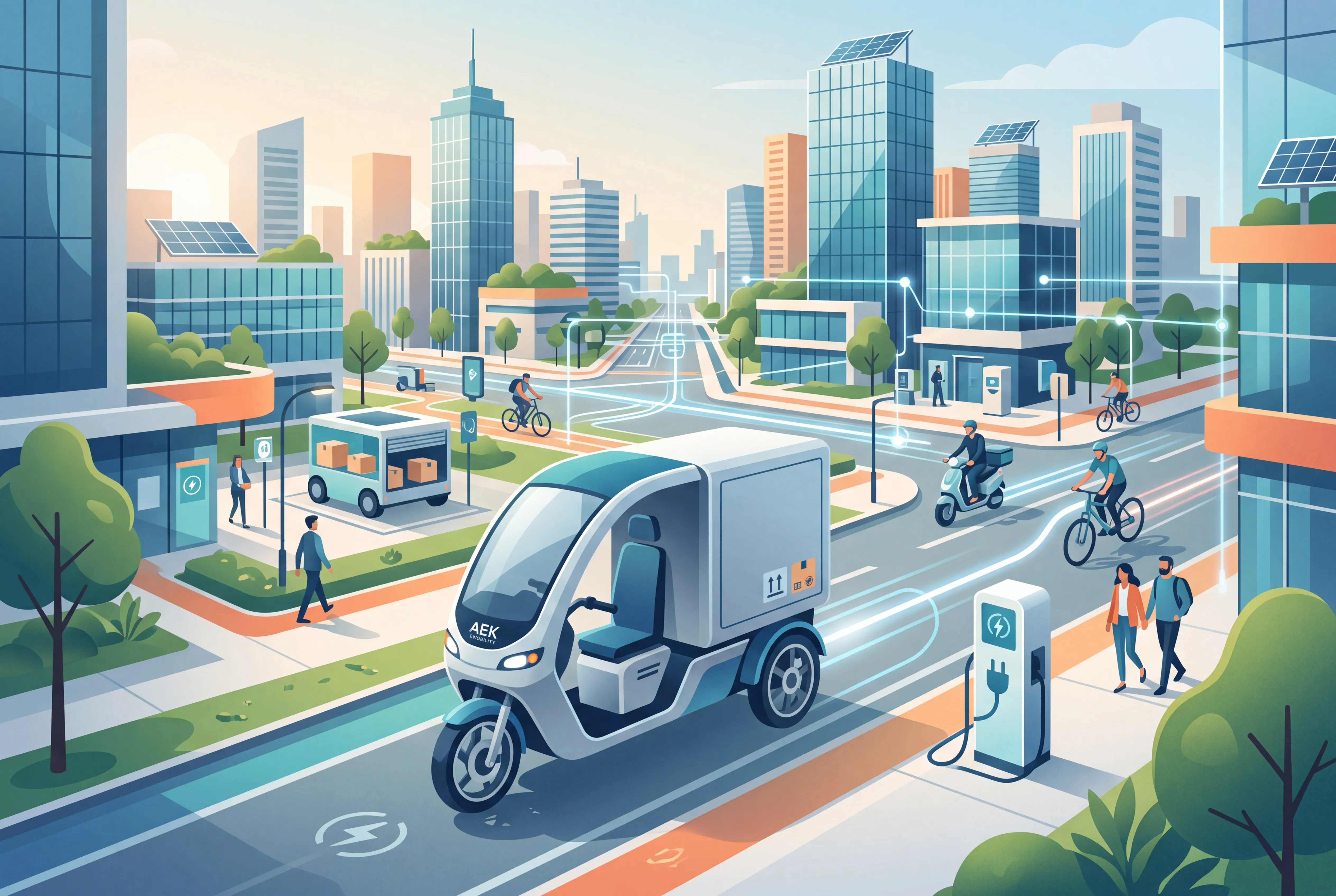
AEK EMOBILITY PRIVATE LIMITED is a Pune-based electric vehicle startup focused on sustainable urban and rural transport. They provide e-bikes, cargo e-bikes, and 3-wheeler e-bikes designed to reduce pollution and traffic congestion while offering an economical solution for delivery drivers and small businesses. By prioritizing safety, reliability, and accessibility, AEK EMOBILITY aims to make micro-mobility a practical, daily choice for commuters and commercial operators alike.
In an era where urban centers face increasing pressure from rapid urbanization, the logistics of "last-mile" delivery—the final leg of getting a package to a customer's doorstep—has become a massive bottleneck. Traditional fuel-based vehicles are not only expensive to operate but also contribute significantly to local air pollution. AEK EMOBILITY addresses these twin challenges by offering electrified alternatives that lower operational costs for businesses and provide cleaner transit options for citizens.
This business model is built on the premise that the future of mobility is small, electric, and decentralized. By focusing on cargo-specific designs, they are tapping into the booming e-commerce market, which demands high-frequency, short-distance deliveries. Their approach is not merely to sell a vehicle, but to provide a foundational tool for the micro-entrepreneur, helping small shop owners and delivery professionals operate more efficiently in crowded cityscapes.
Market Analysis: Industry Trends and Target Audience
The target audience for AEK EMOBILITY includes independent delivery professionals, local small business owners requiring logistics, and environmentally conscious urban commuters. These groups are united by a common pain point: the rising cost of fuel and the inefficiency of traditional transport methods in dense, traffic-heavy environments.
Several key industry trends are currently shaping this sector:
-
The Rise of the Gig Economy: As food and grocery delivery services grow, there is an insatiable demand for affordable, high-utility delivery vehicles. Gig workers are sensitive to vehicle price and "total cost of ownership," making the e-bike a superior alternative to a scooter or car.
-
Government Push for Electrification: Regulatory frameworks across India, particularly in cities like Pune, are favoring green energy. Subsidies, dedicated charging infrastructure, and emissions regulations are nudging the market toward EV adoption, providing a favorable tailwind for startups in this space.
-
Urban Congestion and Logistics Costs: With urban density increasing, large vehicles are becoming liabilities. Small-form-factor EVs can navigate narrow streets faster, park easier, and avoid the high overhead of fuel-intensive delivery chains, directly improving the profitability of local businesses.
Competitive Landscape: How AEK EMOBILITY PRIVATE LIMITED Compares to Existing Alternatives
The micro-mobility space is becoming increasingly crowded, featuring everything from legacy automotive players pivoting to electric, to pure-play EV startups and imported low-cost kits. AEK EMOBILITY operates in the "value-engineered" segment, balancing cost-effectiveness with robust design.
Key Advantages of AEK EMOBILITY PRIVATE LIMITED
- Specialized Utility Focus: Unlike mass-market e-scooter brands, AEK emphasizes cargo-specific designs, meaning their geometry and components are tuned for loads rather than just passenger comfort.
- Localized Research and Development: By testing their products in the specific conditions of Indian cities and villages, they ensure better ground clearance, thermal management, and ruggedness compared to imported generic models.
- Cost-Efficiency for the Micro-Entrepreneur: The startup is explicitly positioning its products as an investment tool rather than a luxury, making them attractive to price-sensitive customers who view the e-bike as a source of income.
Limitations and Market Challenges
- Infrastructure Dependence: The adoption of any e-mobility solution is inextricably linked to the availability of charging points. AEK EMOBILITY must operate in a market where range anxiety remains a significant psychological and functional barrier.
- After-Sales Service Scaling: Maintaining a network of service centers is capital-intensive. Ensuring that a delivery rider's bike can be repaired quickly to minimize downtime is a challenge for any new hardware-based startup.
- Fierce Price Wars: The presence of large, well-funded players or cheap, lower-quality imports creates a "race to the bottom" regarding pricing, which can threaten the margins of a smaller startup focusing on quality.
AI Startup Validation Score & Assessment
- Problem Significance: 85/100 - Urban mobility and logistics are massive pain points that require structural change; the need for cleaner alternatives is undeniable.
- Market Demand: 80/100 - Strong tailwinds from the e-commerce sector and gig economy growth suggest a persistent, high demand for cargo-specific solutions.
- Innovation Level: 65/100 - While the focus on cargo design is smart, the underlying technology (e-bikes) is not highly disruptive; success depends on execution and localized service.
- Business Model Potential: 75/100 - A focus on B2B (small businesses) and gig economy workers creates a recurring opportunity for upgrades and maintenance services.
- Scalability Opportunity: 70/100 - Hardware manufacturing requires significant capital and inventory management, making scaling slower than software-based businesses.
- Competitive Advantage: 60/100 - The market is fragmented; defending a competitive edge requires intense focus on build quality and localized service networks.
- Long-Term Sustainability: 75/100 - As environmental regulations tighten, electric micro-mobility will become a mandatory business requirement, supporting long-term viability.
Overall Validation Score: 73/100
Strategic Lessons for Aspiring Entrepreneurs
-
Solve for the Professional, Not the Consumer: By targeting delivery drivers, AEK EMOBILITY turns their product into a tool for profit. Founders should look for "business-case" buyers rather than casual consumers to ensure higher loyalty and usage rates.
-
Localization is an Invisible Moat: Success in hardware isn't just about the spec sheet; it's about how the vehicle handles potholes, heat, and humidity. Designing for the specific local environment acts as a barrier against generic international competitors.
-
Build for Reliability to Reduce Churn: In a B2B context, vehicle downtime equals lost revenue. Startups must prioritize the robustness of their supply chain and service infrastructure early on, as product failure quickly destroys brand reputation.
Opportunities for Concept Improvement & Expansion
- Battery-as-a-Service (BaaS) Model: AEK could shift part of their revenue toward leasing batteries or establishing a battery-swapping network, which lowers the upfront cost of the vehicle for the user and creates recurring revenue.
- Integrated Telematics: Adding software that tracks delivery efficiency, battery health, and predictive maintenance would make the bikes more valuable to small business owners who manage fleets.
- Financing Partnerships: Collaborating with NBFCs (non-banking financial companies) to offer easy EMI plans specifically for gig workers would significantly lower the barrier to purchase and drive rapid adoption.
Opportunities and Risks of Starting a Similar Business
Opportunities
New entrants can find significant room in niche cargo segments, such as specialized cooling boxes for pharmaceutical or food deliveries, which require specific chassis designs. Furthermore, as cities move toward "green zones," businesses will eventually be forced to adopt electric transport, creating a ready-made pipeline of mandatory demand.
Risks
Entry barriers include high capital expenditure for R&D, compliance with stringent vehicle safety regulations, and the logistics of building a distributed service network. Startups also face significant risk from volatile battery prices and potential competition from established two-wheeler giants entering the electric space.
Frequently Asked Questions
FAQ 1: What is the main problem that AEK EMOBILITY PRIVATE LIMITED addresses?
AEK addresses the high cost and environmental impact of last-mile logistics. By replacing fuel-powered vehicles with efficient e-bikes and cargo-capable 3-wheelers, they help delivery drivers and businesses save on fuel costs while reducing pollution and navigating traffic more effectively.
FAQ 2: Who are the primary target customers for this type of business?
The primary customers are gig-economy delivery professionals, local delivery services, small shop owners, and commuters looking for affordable, eco-friendly transport solutions. The focus is on users who rely on mobility as a functional, daily utility for their business or work.
FAQ 3: What is the typical revenue model for a startup like AEK EMOBILITY PRIVATE LIMITED?
The primary revenue comes from the direct sale of vehicles. However, sustainable models often include secondary income from maintenance, spare parts sales, extended warranties, and potentially, fleet financing partnerships or battery leasing services for commercial clients.
FAQ 4: How can someone validate a similar startup idea?
Validating a hardware startup requires deep market research to confirm if the price-to-performance ratio aligns with the target customer's budget. You should evaluate competitive products, identify gaps in service, and run demand signals. Using a tool like ideation.biz can help you simulate this market research, analyze competitor positioning, and identify hidden risks before investing heavily in manufacturing.
FAQ 5: What factors should be analyzed before launching a new venture?
Key factors include market size, regulatory environment, supply chain stability, and user acquisition costs. For hardware-heavy businesses, unit economics and maintenance logistics are critical. Founders can use ideation.biz to perform comprehensive SWOT analyses and validate their strategic plans, ensuring their roadmap is data-backed rather than built on assumptions.
FAQ 6: How can founders identify hidden risks in their business concept?
Hidden risks often lie in operational complexity or market saturation. Founders should look for potential bottlenecks like dependency on rare raw materials or changing government policies. By utilizing the validation insights provided by ideation.biz, you can get a structured report on potential threats, competitor maneuvers, and market trends that might otherwise be overlooked during the excitement of the initial launch.
Conclusion
AEK EMOBILITY PRIVATE LIMITED highlights the immense potential for specialized, value-focused micro-mobility solutions in rapidly developing urban areas. Their success will likely hinge on their ability to maintain vehicle quality while scaling a responsive service network that keeps their commercial users on the road. For founders in the hardware and green mobility sectors, the key takeaway is to build products that solve economic problems for the user, turning the vehicle into a partner in their business success.
If you have a business idea in the mobility, logistics, or hardware sector, don't leave your success to chance. Use ideation.biz to validate your concept, analyze potential competitors, and stress-test your business model before you commit time and capital.
Validate Your Startup Idea Before You Invest Time & Money
Get instant market insights, competitive analysis, and strategic recommendations for your next venture.
Related Blogs
More insights on validation and entrepreneurship.