Aditri Handcrafts: Bridging Traditional Indian Textiles with Modern E-commerce
Explore the growth potential and business model of Aditri Handcrafts, a lifestyle brand merging Indian heritage with modern e-commerce strategy.
Introduction: Who is Aditri Handcrafts and What Problem Do They Solve?
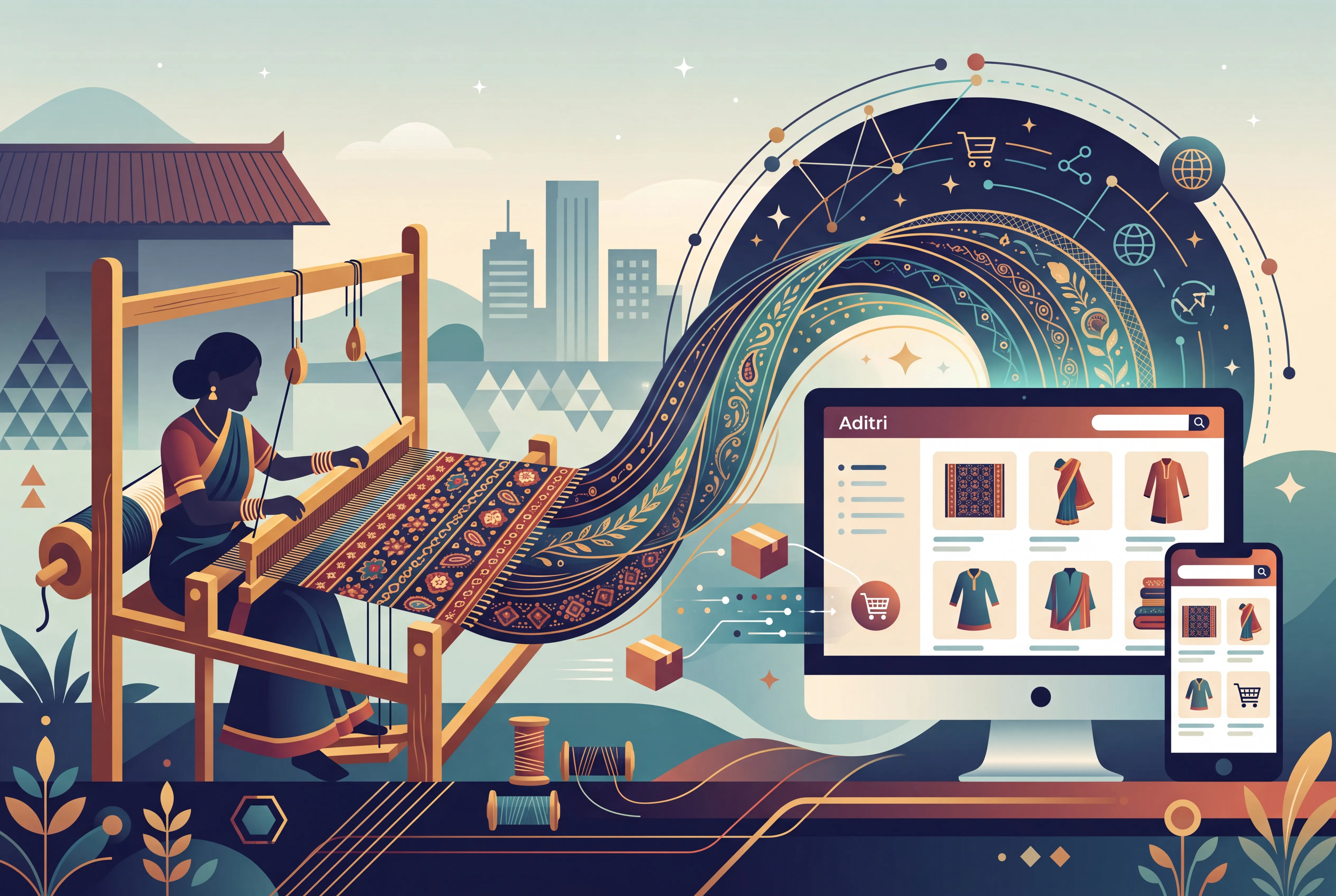
Aditri Handcrafts and Handlooms Private Limited is a lifestyle e-commerce brand that bridges the gap between traditional Indian artistry and the preferences of the modern, new-age woman. By offering contemporary renditions of traditional motifs and designs, Aditri solves the problem of accessibility and relevance for high-quality, authentic Indian ethnic wear. It provides a platform where cultural heritage meets modern fashion sensibilities, catering to women who value both legacy and modern progress.
The startup operates in the competitive textile and apparel sector, specifically focusing on apparel and accessories. By partnering with major online marketplaces like Myntra, Pernia's Pop-up, and Amazon Karigar, the brand has effectively addressed the challenge of distribution that often hinders traditional handicraft businesses. This strategic positioning allows Aditri to scale its reach beyond its South Delhi origins to a global audience, balancing the authenticity of artisanal work with the convenience of modern e-commerce.
Market Analysis: Industry Trends and Target Audience
The target audience for Aditri consists primarily of urban Indian women who appreciate the intricate details of handloom products but seek styles that fit a contemporary lifestyle. These consumers are not just buying clothes; they are investing in pieces that represent cultural identity while being versatile enough for modern settings, such as corporate environments or social gatherings. The key pain points addressed here include the difficulty of finding authentic, sustainably sourced handicraft items and the lack of modern silhouettes in traditional ethnic wear markets.
Three key industry trends support this business concept. First, there is a massive shift toward 'slow fashion' and sustainable apparel, where consumers are actively looking for ethically sourced, handcrafted products over mass-produced alternatives. Second, the rise of digital-first marketplaces has enabled small-to-medium handicraft brands to bypass traditional retail intermediaries, resulting in higher margins and direct consumer feedback. Third, the increasing influence of social media and influencer marketing allows brands like Aditri to tell a compelling story, which is essential when selling products that carry cultural or artisanal significance.
Competitive Landscape: How Aditri Handcrafts Compares to Existing Alternatives
Aditri operates in a space crowded by both large-scale retail chains and smaller, niche boutiques. While large retailers often prioritize volume and price, and boutiques may lack the digital infrastructure to scale, Aditri finds a balance by optimizing pricing through direct-to-consumer online channels while maintaining the exclusivity of handcrafted goods. Unlike generic apparel brands, Aditri positions itself through its deep connection to cultural roots and the quality of its craftsmanship.
Key Advantages of Aditri Handcrafts
- Authenticity: By focusing on traditional arts, they offer products that are verified and culturally significant, standing out from factory-produced replicas.
- Multi-Channel Presence: Leveraging major marketplaces like Myntra and Amazon provides immediate credibility and access to millions of existing customers.
- Contemporary Design Approach: By blending traditional motifs with modern silhouettes, they make ethnic wear relevant for everyday use rather than just festivals or special occasions.
- Social Proof: Active engagement on platforms like Instagram and Facebook allows the brand to build a community, which is crucial for high-involvement fashion purchases.
Limitations and Market Challenges
- Supply Chain Complexity: Scaling handcrafted products is notoriously difficult because labor-intensive methods cannot be easily automated, leading to potential inventory shortages.
- Price Sensitivity: While the brand optimizes pricing, competing with fast-fashion brands that offer lower prices at the expense of quality remains a constant challenge in the Indian market.
- Logistics Costs: Shipping traditional items, especially if they are fragile or heavy, requires specialized handling and can eat into profit margins, particularly for international orders.
AI Startup Validation Score & Assessment
- Problem Significance: 80/100 - The need for authentic, sustainable, and modern ethnic fashion is a growing concern for urban consumers, making this a relevant problem.
- Market Demand: 85/100 - The Indian handloom and ethnic wear market is vast and currently seeing a resurgence in demand from both domestic and diaspora audiences.
- Innovation Level: 70/100 - While the product category is traditional, the business model of using modern digital marketplaces for niche artisanal goods is well-executed.
- Business Model Potential: 75/100 - Direct-to-consumer digital commerce paired with marketplace partnerships is a proven model for profitability in the apparel sector.
- Scalability Opportunity: 65/100 - Scalability is limited by the nature of the supply chain; producing handcrafted items cannot be linearly scaled like software or mass manufacturing.
- Competitive Advantage: 70/100 - The brand's ability to maintain 'exclusivity' while being present on high-volume platforms is its strongest defensive moat.
- Long-Term Sustainability: 75/100 - Given the global interest in Indian culture and sustainability, the brand is well-positioned for long-term growth if it manages production consistency.
Overall Validation Score: 74/100
Strategic Lessons for Aspiring Entrepreneurs
First, Aditri demonstrates that you don't need to invent a new product to build a successful startup; you can 're-invent' a traditional category by updating the design and distribution. Second, the importance of third-party platform partnerships cannot be overstated—starting on Amazon or Myntra can provide the data and volume necessary to grow before you scale your own website. Third, branding is everything in niche retail. By associating themselves with the name Aditri (Goddess Lakshmi), they create a narrative of prosperity and elegance that resonates deeply with their target demographic.
Opportunities for Concept Improvement & Expansion
Aditri could significantly benefit from a subscription-based model for seasonal curated collections, which would help with inventory predictability. Additionally, they could explore 'Phygital' experiences—pop-up events in major metros that allow customers to touch and feel the fabric while purchasing through the website. Finally, enhancing their storytelling with video-led content showing the artisan process could further boost the brand’s value proposition and build trust with international customers.
Opportunities and Risks of Starting a Similar Business
Opportunities
Founders in this space can exploit the growing global demand for ethically made, cultural goods. There is massive potential to utilize AI-driven tools to analyze design trends in real-time, ensuring that the products developed match what the market is currently seeking before investing in inventory.
Risks
The biggest risk is the lack of control over the artisan supply chain. If the lead time to produce a garment is too high, you lose the ability to capture seasonal trends. Furthermore, customer acquisition costs in the apparel industry are extremely high, necessitating a strong focus on repeat customers rather than just new traffic.
Frequently Asked Questions
FAQ 1: What is the main problem that Aditri Handcrafts addresses?
Aditri addresses the difficulty consumers face in finding authentic, high-quality Indian traditional wear that fits a modern, contemporary aesthetic and lifestyle.
FAQ 2: Who are the primary target customers for this type of business?
The primary audience consists of modern, urban Indian women who appreciate traditional craftsmanship but require clothing that is versatile and suitable for a fast-paced, professional, or social lifestyle.
FAQ 3: What is the typical revenue model for a startup like Aditri Handcrafts?
The model is primarily a direct-to-consumer (D2C) e-commerce approach, supplemented by commissions and sales through third-party aggregators and marketplaces.
FAQ 4: How can someone validate a similar startup idea?
Validating a retail idea involves testing demand before building inventory. You should conduct market analysis to see if your style matches current trends. Tools like ideation.biz can provide the market research and competitor insights needed to ensure your startup idea has the demand required for success.
FAQ 5: What factors should be analyzed before launching a new venture?
You must look at market size, unit economics, supply chain reliability, and competitive saturation. Many founders spend too much time on design and not enough on validation. Utilizing platforms such as ideation.biz helps you simulate these business risks and identify gaps before you commit capital.
FAQ 6: How can founders identify hidden risks in their business concept?
Hidden risks often lie in customer acquisition costs and inventory churn. To identify these, you need a structured approach to SWOT analysis. Founders should use tools like ideation.biz to generate comprehensive strategic reports that highlight potential failures in their market positioning or logistics strategy.
Conclusion
Aditri Handcrafts exemplifies how a business can successfully modernize traditional artistry for a new age, creating both cultural and commercial value. By balancing heritage with the efficiency of modern e-commerce, they have created a sustainable model for the apparel industry. Success in this field requires not just an eye for design, but a rigorous approach to market validation and operational management. Before you dive into building your own brand, ensure you have the data to back your vision—use ideation.biz to test your concept and navigate the complexities of your market before you spend a single dollar.
Validate Your Startup Idea Before You Invest Time & Money
Get instant market insights, competitive analysis, and strategic recommendations for your next venture.
Related Blogs
More insights on validation and entrepreneurship.