Advanced Bicycles Engineering: Transforming Indian Pro Cycling Through 3D Printing
Explore how ADVANCED BICYCLES ENGINEERING is shaping Indian pro cycling with 3D printing and material science. Learn from their business model and market potential.
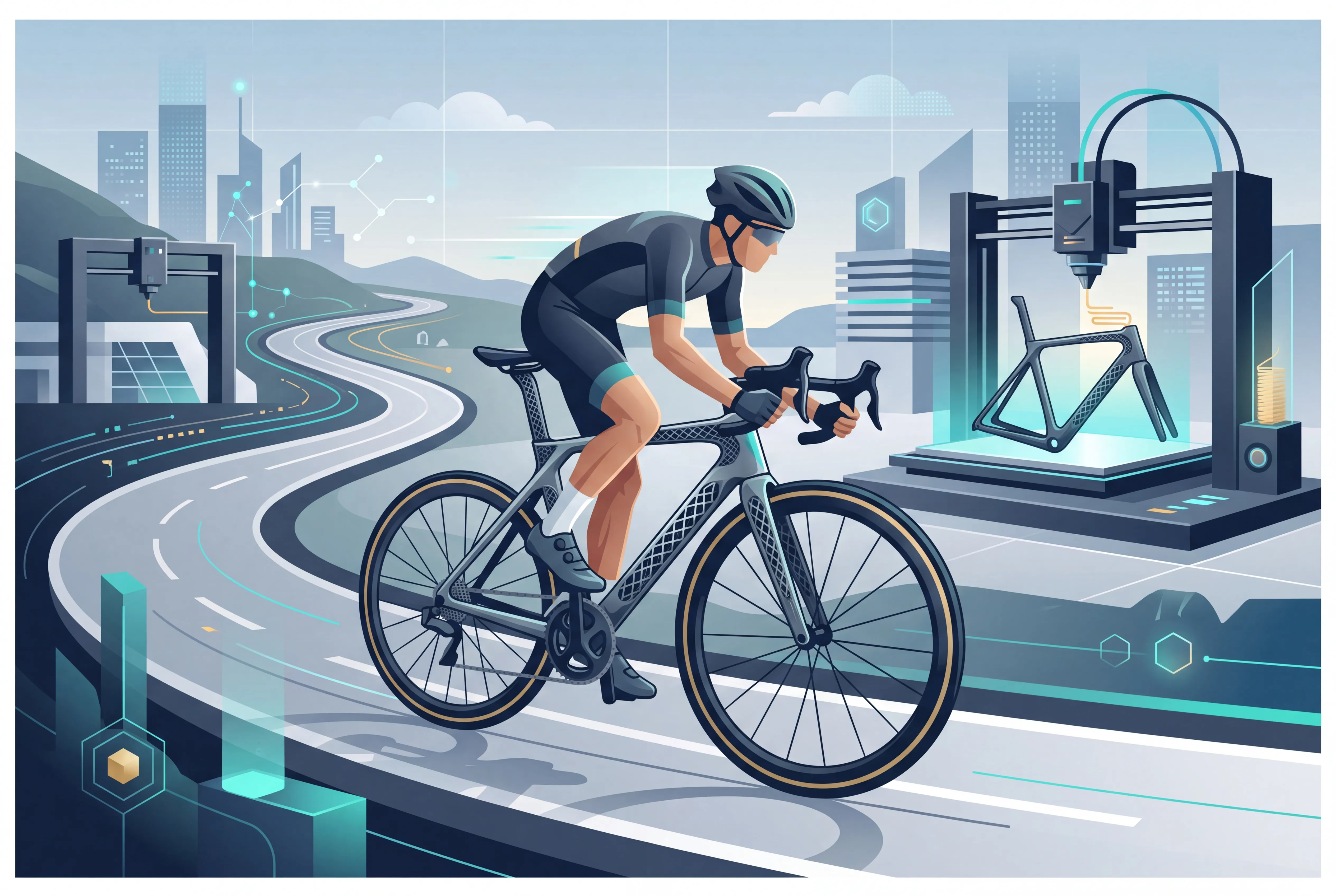
Introduction: Who is ADVANCED BICYCLES ENGINEERING COMPOSITES PRIVATE LIMITED and What Problem Do They Solve?
ADVANCED BICYCLES ENGINEERING COMPOSITES PRIVATE LIMITED is a Bengaluru-based hardware startup dedicated to designing and manufacturing high-performance bicycles for professional road and velodrome racing. By leveraging advanced materials science and 3D printing, the company aims to bridge the gap between Indian manufacturing and the elite requirements of global cycling circuits. The firm solves the accessibility issue for Indian athletes who traditionally rely on expensive, imported bicycle frames from global legacy brands, which often lack local serviceability and specialized engineering support.
Professional cycling is an equipment-intensive sport where the difference between gold and silver is often measured in millimeters and milliseconds. For years, the Indian market for high-end racing cycles has been dominated by international giants, leaving local professionals with few options that match global technological benchmarks. ADVANCED BICYCLES ENGINEERING COMPOSITES PRIVATE LIMITED addresses this by integrating metallurgical expertise and material research to build bespoke, competitive racing hardware that stands up to the rigorous demands of professional track and road competition.
By working closely with India's premier research institutions and materials scientists, the startup is essentially localizing the "tech-stack" of professional cycling. This is not just a manufacturing play; it is a push to create an indigenous ecosystem that allows Indian cyclists to train and race on equipment that is engineered to be as good as, if not better than, what the world's best use. The problem they address is both logistical and technological: ensuring that Indian talent has access to world-class tools without the astronomical import costs and supply chain delays that typically hinder growth in the domestic sector.
Market Analysis: Industry Trends and Target Audience
The target audience for ADVANCED BICYCLES ENGINEERING COMPOSITES PRIVATE LIMITED includes elite professional cyclists, racing federations, and high-performance training academies within India. These individuals and organizations operate in a high-stakes environment where equipment reliability, aerodynamics, and weight optimization are critical performance drivers.
Several industry trends support this business concept. First, the "Make in India" initiative and the growth of indigenous additive manufacturing capabilities have made it feasible to produce complex, high-tolerance components domestically that were previously restricted to international production hubs. Second, there is a visible rise in the popularity of professional cycling in India, with increasing investments in velodrome infrastructure and professional racing circuits. Finally, global shifts toward custom geometry and personalized equipment for athletes have created a niche for companies that can iterate rapidly using 3D printing, moving away from mass-produced "cookie-cutter" carbon fiber frames.
Competitive Landscape: How ADVANCED BICYCLES ENGINEERING COMPOSITES PRIVATE LIMITED Compares to Existing Alternatives
The current competitive landscape is dominated by established global titans like Specialized, Trek, and Pinarello. These brands hold massive market share, decades of R&D history, and professional cycling team sponsorships that make their equipment the standard. Against these giants, ADVANCED BICYCLES ENGINEERING COMPOSITES PRIVATE LIMITED offers a localized alternative that focuses on material science innovation and proximity to the end-user.
Key Advantages of ADVANCED BICYCLES ENGINEERING COMPOSITES PRIVATE LIMITED
- Proximity and Customization: Unlike global brands, which ship "off-the-shelf" frames, the Bengaluru-based team can work directly with athletes to refine geometry and material composition.
- Materials Expertise: By leveraging local metallurgy and advanced composite research, they can pioneer unique material blends that are optimized for Indian racing conditions.
- Rapid Iteration via 3D Printing: 3D printing allows for shorter lead times for prototyping and specialized component manufacturing compared to traditional molding processes.
- Cost Efficiency: Removing the middleman and international logistics reduces the final cost to the athlete while maintaining high performance standards.
Limitations and Market Challenges
- Brand Equity: Building trust with elite athletes who are accustomed to proven global logos is a significant hurdle that requires years of competitive wins.
- Scale of Manufacturing: Moving from bespoke prototypes to scalable, high-quality production without sacrificing performance is a common challenge for material-heavy startups.
- Supply Chain Integration: Sourcing consistent, high-grade raw materials for composites in India can sometimes involve bureaucratic or availability constraints compared to established European/American supply chains.
AI Startup Validation Score & Assessment
- Problem Significance: 85/100 - The barrier to entry for Indian cyclists using top-tier equipment is a major pain point; solving this provides clear value.
- Market Demand: 70/100 - While the professional niche is small, the prestige and potential for growth in domestic sports make this a high-value opportunity.
- Innovation Level: 90/100 - Combining 3D printing with advanced materials science to produce performance bicycles is highly innovative for the Indian market.
- Business Model Potential: 75/100 - High-margin hardware is difficult but rewarding, provided they can establish a reputation for quality.
- Scalability Opportunity: 65/100 - Hardware manufacturing in sports is inherently capital-intensive and harder to scale than software, but the niche allows for healthy margins.
- Competitive Advantage: 70/100 - Their proximity to talent and academic R&D provides a defensive moat against foreign competition that lacks local ground presence.
- Long-Term Sustainability: 80/100 - As the Indian sports ecosystem matures, the need for homegrown high-end equipment will only increase.
Overall Validation Score: 76.4/100
Strategic Lessons for Aspiring Entrepreneurs
- Solve for Specificity: By focusing on professional cyclists and velodrome racing rather than mass-market consumer bikes, ADVANCED BICYCLES ENGINEERING COMPOSITES PRIVATE LIMITED demonstrates that narrowing your niche allows for deeper engineering breakthroughs.
- Leverage Local Research Institutions: Collaborating with national metallurgy and research institutes is a brilliant way to gain technical validation and access to expensive lab facilities that a small startup could never afford to build alone.
- Validation Through Excellence: In hardware, the product is your marketing. The startup's success relies on the performance of the bike under race conditions, proving that even in competitive markets, superior technical performance speaks louder than advertising spend.
Opportunities for Concept Improvement & Expansion
- B2B Service Model: Beyond manufacturing frames, the company could expand into performance consultancy, offering aerodynamics testing or custom 3D-printed ergonomic components (like saddles or cockpit parts) for non-pro cyclists.
- Sustainability Focus: Given the waste generated by traditional carbon fiber production, positioning themselves as a more sustainable, "circular" manufacturer using advanced printing could appeal to modern athletes and sponsors.
- Digital Twin Integration: Using sensors and IoT to create a "digital twin" of the bike and the athlete’s performance data could provide a unique selling point that legacy brands are slower to implement.
Opportunities and Risks of Starting a Similar Business
Opportunities
- Customization as a Service: The rise of "personalization" in sports means there is a massive opportunity for startups that can build frames tailored to an athlete’s specific biomechanics.
- Niche Sports Tech: Similar methodologies can be applied to other equipment-heavy sports like archery, fencing, or competitive rowing, where metallurgy and material optimization are key.
Risks
- High R&D Burn Rate: Hardware requires significant upfront investment in materials and lab equipment before a single sale is made.
- Safety and Liability: High-performance gear implies high physical risk. A frame failure at professional speeds could result in catastrophic injury, making insurance and rigorous testing mandatory.
Frequently Asked Questions
FAQ 1: What is the main problem that ADVANCED BICYCLES ENGINEERING COMPOSITES PRIVATE LIMITED addresses?
They address the lack of localized, high-performance cycling equipment for Indian professional athletes, who traditionally face high costs and supply chain hurdles when sourcing gear from international legacy brands.
FAQ 2: Who are the primary target customers for this type of business?
Their primary customers are professional road and velodrome cyclists, elite racing teams, and sports academies seeking high-end, customizable hardware that meets global competition standards.
FAQ 3: What is the typical revenue model for a startup like ADVANCED BICYCLES ENGINEERING COMPOSITES PRIVATE LIMITED?
Their revenue typically comes from the direct sale of high-margin custom frames, specialized components, and potentially performance consulting services tailored to individual or team needs.
FAQ 4: How can someone validate a similar startup idea?
Validating a hardware-intensive idea requires deep market research, competitive benchmarking, and technical feasibility studies. Using a tool like ideation.biz can help you perform an instant competitive analysis and SWOT evaluation to see if your product fills a genuine market gap before you invest in expensive materials research.
FAQ 5: What factors should be analyzed before launching a new venture?
Entrepreneurs should analyze market size, competitive landscape, manufacturing costs, and the regulatory environment. Before spending time on engineering, you can use ideation.biz to conduct market research and get an idea score, helping you understand if your concept is actually viable and scalable.
FAQ 6: How can founders identify hidden risks in their business concept?
Risk identification involves analyzing supply chains, technical feasibility, and market adoption barriers. Many founders use ideation.biz to generate comprehensive reports that highlight risks early in the planning phase, ensuring you address potential pitfalls before they become reality.
Conclusion
ADVANCED BICYCLES ENGINEERING COMPOSITES PRIVATE LIMITED is carving out a vital space in Indian sports technology by proving that with the right materials science and commitment to engineering, domestic products can rival the global standard. Their journey highlights the potential for specialized manufacturing in an increasingly performance-oriented Indian market. For founders in the hardware or sports-tech space, the key takeaway is to build for a specific problem that is currently ignored by larger competitors. If you are sitting on an idea and want to determine if it has the potential to grow into a sustainable business, take the first step toward clarity. Visit ideation.biz to validate your startup concept, uncover potential risks, and receive a professional assessment that moves you from a gut feeling to a data-backed plan.
Validate Your Startup Idea Before You Invest Time & Money
Get instant market insights, competitive analysis, and strategic recommendations for your next venture.
Related Blogs
More insights on validation and entrepreneurship.